Minecraft Java Edition 26.3 is the version line carrying the gameplay content that Mojang later named Wilderness Bound. Players usually look up “Minecraft 26.3” for one of three reasons: to check the current Java build status, see the major Wilderness Bound additions, or understand technical changes that arrived alongside them.
Minecraft Java Edition 26.3 released on September 15, 2026 as the stable Java version of Wilderness Bound. The snapshot and pre-release history below remains useful for understanding when features changed, but players no longer need a testing build to use the game drop.
Minecraft 26.3 in one minute
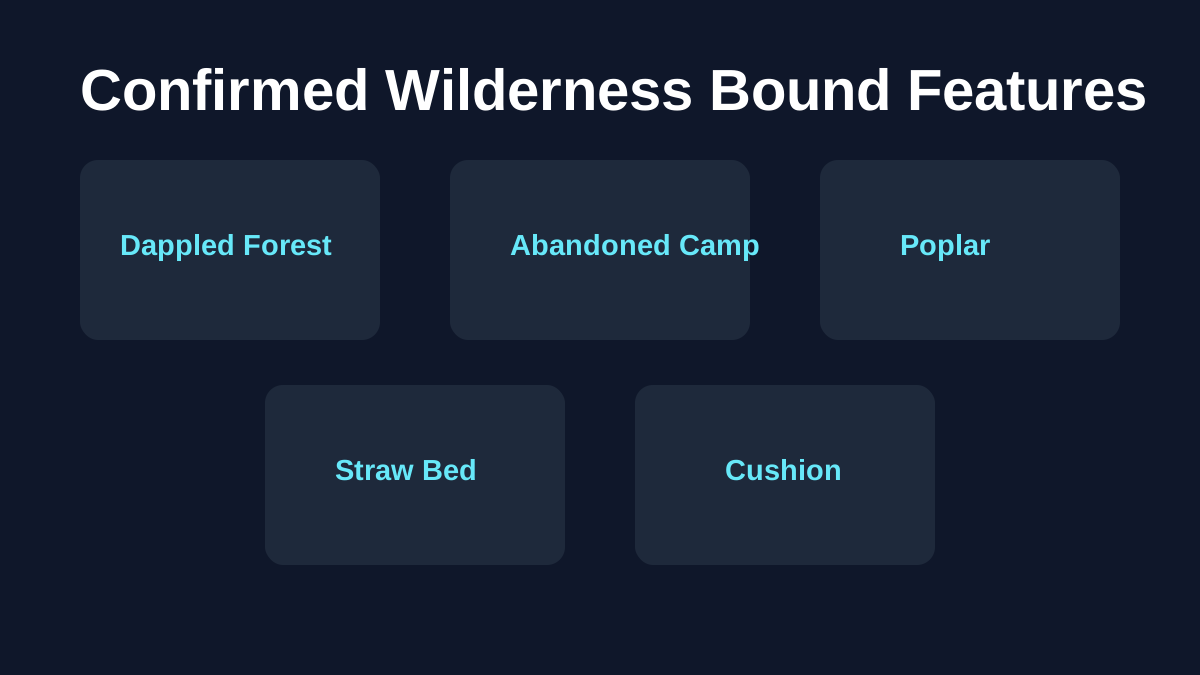
Minecraft Java Edition 26.3 is the stable Java release for Wilderness Bound. Its headline additions are the Dappled Forest, Abandoned Camps, Poplar trees and wood, Shelf Mushrooms, Red Shrubs, Explorer Maps, Straw Beds, Cushions, and new Wool and Concrete stair/slab variants.
If your goal is exploration, start with how to find a Dappled Forest and how to find an Abandoned Camp. For a compact inventory of additions, see all Wilderness Bound features.
Minecraft 26.3 feature summary
The update cycle is much larger than one biome. The main gameplay additions are:
- Dappled Forest biome;
- Poplar trees, three Poplar leaf colors and a full Poplar wood set;
- Shelf Mushrooms and Red Shrubs;
- Abandoned Camp structures across multiple biomes;
- Wool stairs and slabs in all wool colors;
- Straw Beds and Cushions;
- Concrete stairs and slabs in all concrete colors;
- expanded Explorer Maps connected to Abandoned Camps.
The Wilderness Bound features page organizes those additions by player use rather than changelog date.
Snapshot 1 established the exploration theme
Minecraft 26.3 Snapshot 1 arrived on June 23 and introduced the core identity of the update. The Dappled Forest appeared with Poplar trees, red/orange/yellow leaves, Shelf Mushrooms and Red Shrubs. The same snapshot added Abandoned Camps and Wool stair/slab variants.
Most of the features now associated with Wilderness Bound were already present before the official game-drop name existed. Older videos and posts may therefore call the project “Drop 3,” “the autumn drop” or simply “26.3.” Those labels refer to the same development line, but the current public name is Wilderness Bound.
Snapshot 3 added the camping items
Snapshot 3, published July 7, added Straw Beds and Cushions.
The Straw Bed is a travel-focused sleep item: it skips the night without changing your respawn point and is consumed after successful use. The Cushion is a placeable seat crafted from Wool Slabs. These two items made the outdoor-expedition theme much more explicit because they are not simply decorative blocks; they change how a player can rest or settle temporarily while away from a base.
For exact recipes, use Straw Bed and Cushion.
Snapshot 7 expanded building and map exploration
Snapshot 7, published August 4, added Concrete Stairs and Concrete Slabs for all 16 Concrete colors. It also expanded the map system with new Explorer Maps available through Abandoned Camps.
The map changes are more significant than a few renamed icons. Explorer Maps became their own items, new camp destinations were added, and additional maps could point toward structures such as Ancient Cities, Trial Chambers, Mineshafts, Desert Pyramids, Jungle Pyramids, Warm Ocean Ruins and Woodland Mansions.
Snapshot 7 also changed Abandoned Camp loot and removed vibration-blocking behavior from Cushions when they are placed, broken or interacted with. That history is useful when comparing older tutorials with the final 26.3 behavior.
Snapshot 10 and the late development phase
By Snapshot 10 on August 25, the update had moved into a much more polish-focused stage. Mojang changed the Java main-menu panorama to show the Dappled Forest and an Abandoned Camp and continued technical improvements.
Pre-Release 1 followed on September 1. Mojang explicitly described the team as working on bugs, improvements and final touches. Pre-Release 2 arrived September 4. The naming announcement for Wilderness Bound followed on September 5.
Release Candidate 2 followed on September 11 and explicitly announced a September 15 launch. Release Candidate 3 arrived September 14, and the stable Java 26.3 build shipped on September 15.
Is Minecraft 26.3 exactly the same as Wilderness Bound?
Not completely. Wilderness Bound is the game-drop identity used to communicate the player-facing theme across editions. 26.3 is a Java Edition version number.
Java changelogs also include technical material such as data-pack versions, resource-pack versions, command changes, rendering improvements, Realms behavior, performance fixes and bug reports. Those changes belong to the 26.3 software release but are not necessarily “Wilderness Bound features” in the way players use that phrase.
For the game-drop theme and major additions, use the Wilderness Bound overview. For Java version history from snapshots through the stable 26.3 release, stay on this page.
Can you play 26.3 right now?
Yes. Java Edition 26.3 is a stable release, so players can use the normal current-release installation rather than enabling snapshots. The Wilderness Bound gameplay features are part of the released build.
Snapshots remain useful only if you intentionally want to test later Java development. Java moved on to 26.4 Snapshot 1 on September 22, so enabling snapshots now means opting into development beyond the Wilderness Bound release rather than merely gaining access to 26.3.
What about Bedrock Edition?
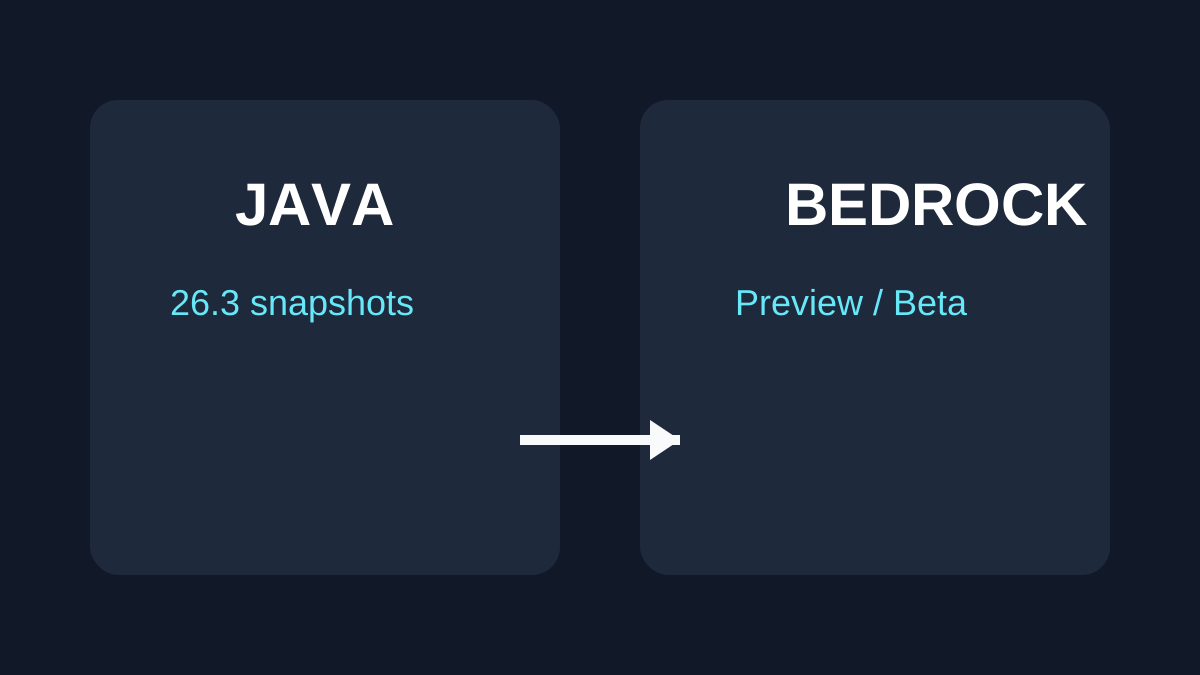
Wilderness Bound also released for Bedrock Edition on September 15 as Bedrock 26.50. Bedrock does not share Java's 26.3 version number, so comparing guides by edition still matters even though the game drop launched on both.
Bedrock received 26.51 and 26.52 hotfixes after launch. Use the Java vs Bedrock guide when a bug, platform rollout or implementation detail depends on the edition.
Which 26.3 guides are most useful for normal play?
If you are not tracking technical changelogs, jump directly to the task you are trying to complete:
- find the Dappled Forest;
- find an Abandoned Camp;
- understand Abandoned Camp loot;
- use the new Explorer Maps;
- grow Poplar trees;
- craft and use a Straw Bed;
- craft and sit on a Cushion.
The version history is most useful when an older tutorial shows snapshot behavior that changed before release. For ordinary survival and building, the focused guides above are faster to use while still linking back to the final release evidence behind change-sensitive details.