Wilderness Bound is the official name of Minecraft's third game drop of 2026. Mojang announced the name on September 5 after a development cycle that had already introduced most of the update through Java Edition 26.3 snapshots and Bedrock Preview builds. The drop is built around a clear theme: leaving your base, traveling into unfamiliar terrain, finding signs of earlier explorers, and using new camping and building tools to make the wilderness easier to survive.
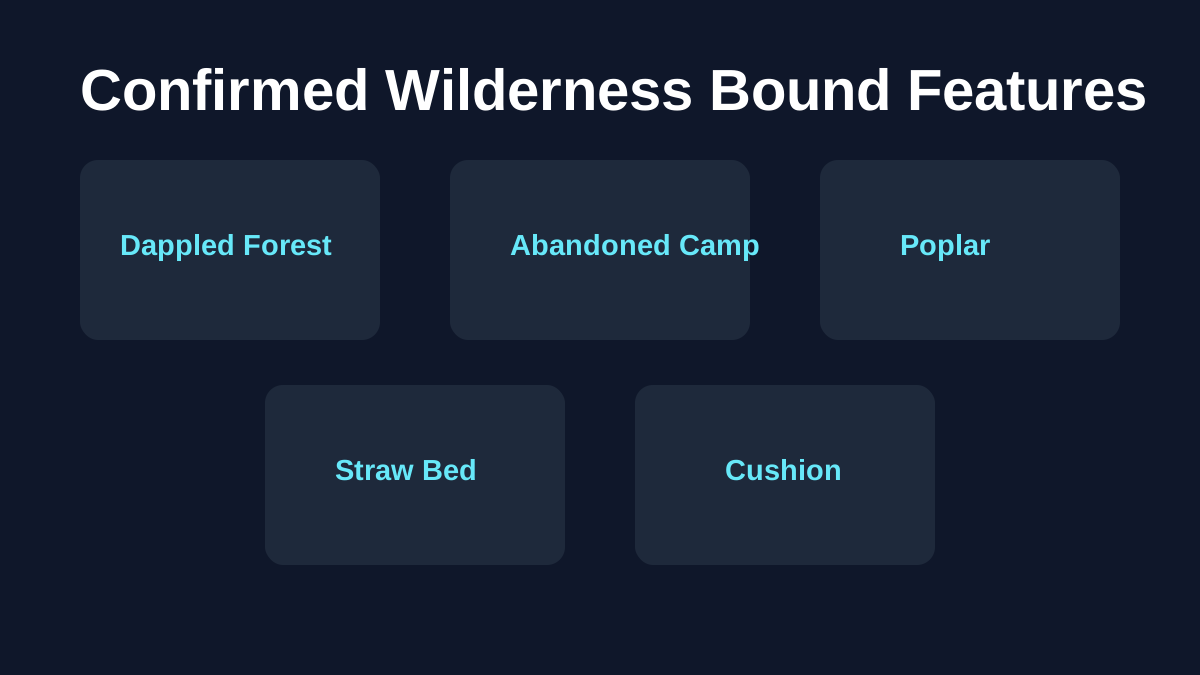
The most important additions are the Dappled Forest, Poplar trees, Abandoned Camps, Explorer Maps, Straw Beds, Cushions, Shelf Mushrooms, Red Shrubs, and new stair/slab variants for Wool and Concrete. That combination makes Wilderness Bound different from an update focused on only one mob or one block family. It connects biome exploration, navigation, renewable resources, travel convenience, and building into one compact game drop.
Current status: Wilderness Bound released on September 15, 2026 for both Minecraft Java Edition and Bedrock Edition. The stable Java release is 26.3 and the corresponding Bedrock release is 26.50.
What does Wilderness Bound add?
The confirmed player-facing feature set is broad enough to support several different play styles.
| Feature | What it changes for players |
|---|---|
| Dappled Forest | Adds a new autumn-colored forest biome near cold biomes |
| Poplar trees | Adds a complete wood family and three leaf colors |
| Abandoned Camps | Adds small surface structures with biome-specific variants and loot |
| Explorer Maps | Expands map-guided exploration through camp loot |
| Shelf Mushroom | Adds a Poplar-tree fungus that can grow, bounce slightly and work in stews |
| Red Shrub | Adds a decorative plant that can spread with Bone Meal |
| Straw Bed | Lets explorers skip night without replacing their spawn point |
| Cushion | Adds a placeable seat in all 16 wool colors |
| Wool stairs/slabs | Extends Wool into new shapes while preserving vibration dampening |
| Concrete stairs/slabs | Extends all 16 Concrete colors into stair and slab shapes |
The all confirmed features page goes deeper on each addition without mixing in unrelated technical changelog items.
The Dappled Forest is the visual center of the update
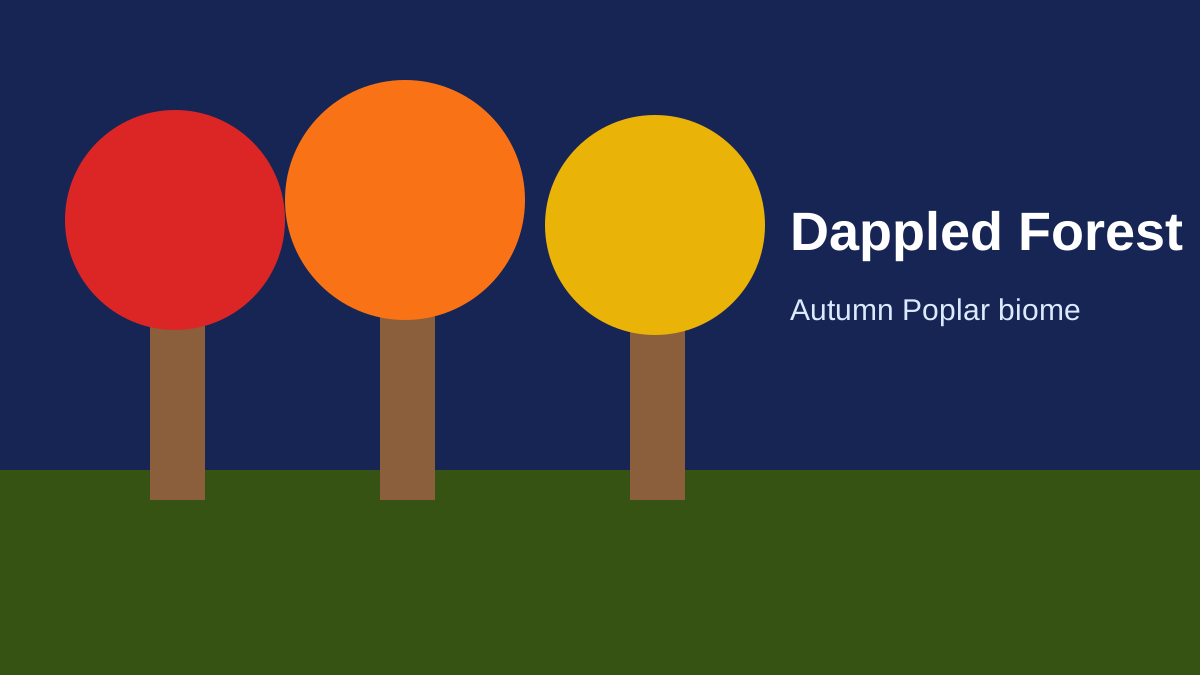
The new Dappled Forest gives Wilderness Bound its strongest visual identity. Mojang describes it as a forest biome that can be found near cold biomes. Its Poplar canopy is made from red, orange and yellow leaf variants, creating an autumn look that is immediately different from standard green forests.
The biome is not just scenery. Poplar Logs provide a new building material, Poplar Leaves can drop saplings, Shelf Mushrooms grow on standing and fallen Poplar trees, Red Shrubs appear on the ground, and a Dappled Forest variant of the Abandoned Camp can generate there. Passive and neutral animals such as sheep, chickens, cows, pigs, rabbits and foxes can also spawn, using cold variants where applicable.
If your main goal is locating the biome rather than understanding the whole update, go directly to How to Find a Dappled Forest.
Abandoned Camps turn exploration into a chain
Abandoned Camps are new surface structures that can generate in many Overworld biomes. Mojang created biome-specific variants instead of one identical template, so a camp in a swamp can feel different from one in a Dappled Forest, taiga, cherry grove or savanna.
The camps contain containers with loot, and their importance increased later in the 26.3 cycle when new Explorer Maps were added. Those maps can point to selected camp variants as well as destinations such as Ancient Cities, Trial Chambers, Mineshafts, Desert Pyramids, Jungle Pyramids, Warm Ocean Ruins and Woodland Mansions. This creates a useful loop: discover a camp, search it, obtain a map, and let that map guide the next leg of the journey.
The Abandoned Camp guide explains the structure itself, while Explorer Maps focuses on the navigation system.
Straw Beds solve a specific travel problem
A normal bed is useful, but it changes your respawn point. That can be inconvenient when you are exploring far from a carefully prepared base. The new Straw Bed is designed around that problem. It lets you skip the night without resetting your spawn location.
In the current Java behavior, three Hay Bales craft four Straw Beds. Each Straw Bed is single-use and is destroyed after you successfully sleep. That trade-off makes it travel gear rather than a replacement for a permanent bed. In dimensions where sleeping is not allowed, attempting to use it destroys the Straw Bed instead of giving you a permanent sleep solution.
Read the Straw Bed recipe and uses guide before relying on it during a long trip.
Cushions make sitting an official interaction
The Cushion is a smaller feature, but it has obvious building appeal. You can craft one from three Wool Slabs of the same color, place it on a suitable flat surface, and interact with it to sit. All 16 wool colors are supported.
Cushions also connect several other Wilderness Bound systems. They use the new Wool Slabs as an ingredient, fit naturally into campsite builds, and Mojang says they can also be found in Abandoned Camps. That gives the item both a crafting route and an exploration connection.
The detailed Cushion guide covers placement, color choices and changed vibration behavior from later snapshots.
Is Wilderness Bound the same as Minecraft 26.3?
For Java Edition, Wilderness Bound's gameplay additions were delivered in the stable 26.3 release on September 15, 2026. Players therefore encounter both names, but they are not perfectly interchangeable.
“Wilderness Bound” is the public game-drop name. “Minecraft Java Edition 26.3” is a version line that also contains technical changes, bug fixes, data-pack updates, rendering changes and other development details that are not part of the marketing identity of the drop. If you need the stable release details and the snapshot-to-release history, use the Minecraft 26.3 guide.
Java and Bedrock both matter
Wilderness Bound launched on both editions on September 15. Java Edition uses version 26.3, while Bedrock Edition uses 26.50 for the game-drop release. The headline features are shared across the two editions, but exact bug fixes, technical identifiers and platform-specific behavior can still differ.
Bedrock received follow-up hotfixes after launch, while Java moved on to the 26.4 snapshot cycle on September 22. For edition-specific version details, use the Java vs Bedrock page.
Can you play Wilderness Bound now?
Yes. Wilderness Bound is available in the normal stable releases of both Java and Bedrock Edition. You do not need to enable snapshots or Preview/Beta builds just to access the Dappled Forest, Abandoned Camps, Poplar blocks, Straw Beds, Cushions or the released Explorer Map system.
For an existing long-term world, the usual world-generation rule still matters: features that depend on new terrain are easiest to find in chunks that have not already been generated. That is different from the old pre-release warning about using test worlds; the game drop itself is now stable.
What changed after release?
The September 15 release turned the snapshot-era feature set into the stable 26.3/26.50 baseline. That does not mean every implementation is frozen forever: Bedrock 26.51 and 26.52 shipped post-release fixes, and future Minecraft versions can continue adjusting bugs or technical behavior.
For Wilderness Bound mechanics, this guide now treats the September 15 release notes as the primary baseline and uses older snapshots mainly to explain how features evolved. When a detail differs by edition or later hotfix, the current edition-specific changelog takes priority.