The Straw Bed is a new single-use sleep item in Minecraft 26.3 designed for players who travel far from their permanent base. Its defining mechanic is simple: it lets you sleep through the night without setting a new spawn point. That solves a long-standing exploration problem where using a normal bed on the road can overwrite the carefully chosen respawn location at home.
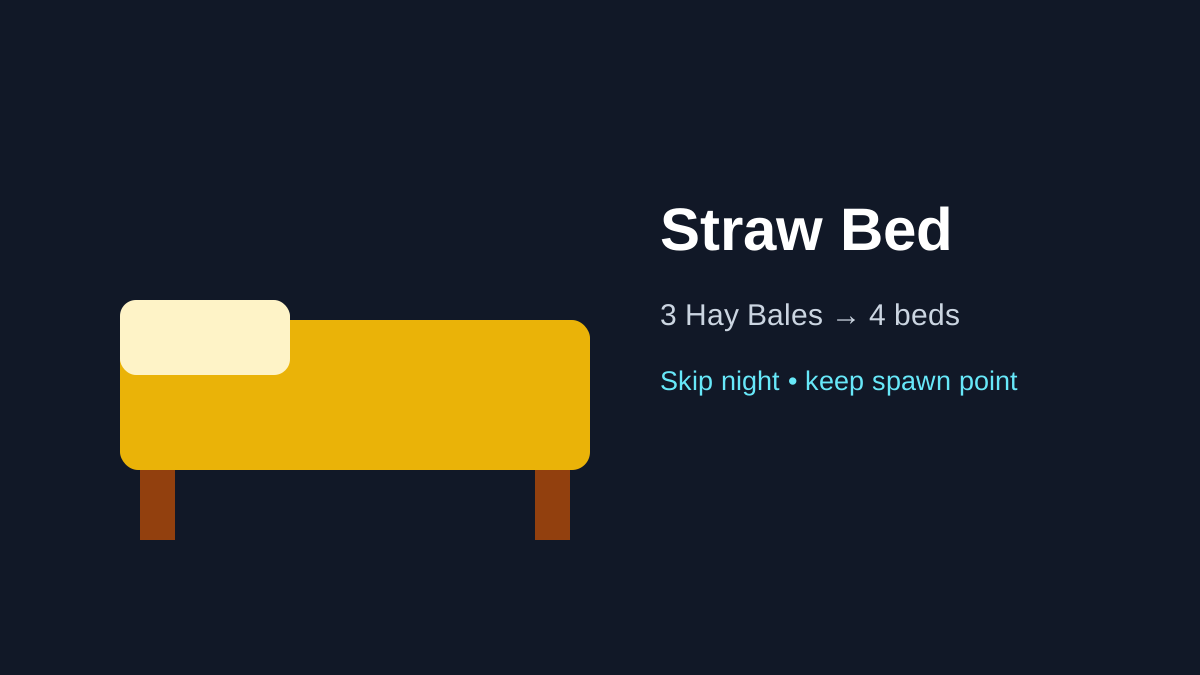
In the current official 26.3 behavior, 3 Hay Bales craft 4 Straw Beds. A Straw Bed is consumed after a successful sleep, so it functions more like expedition gear than permanent bedroom furniture.
Straw Bed quick answers
Recipe: 3 Hay Bales produce 4 Straw Beds.
Does it set your spawn? No. A Straw Bed lets you sleep through the night without changing your spawn point.
Is it reusable? No. It is a single-use bed and is destroyed after use.
Can you use it in the Nether or the End? No. Attempting to sleep there destroys it.
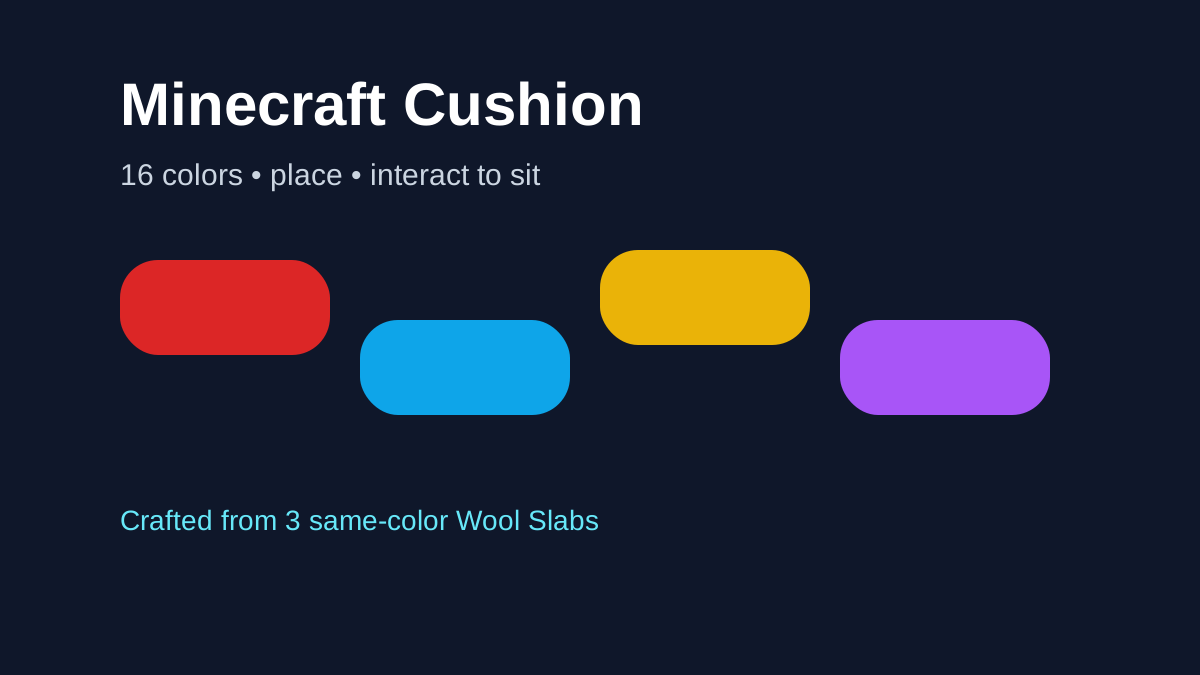
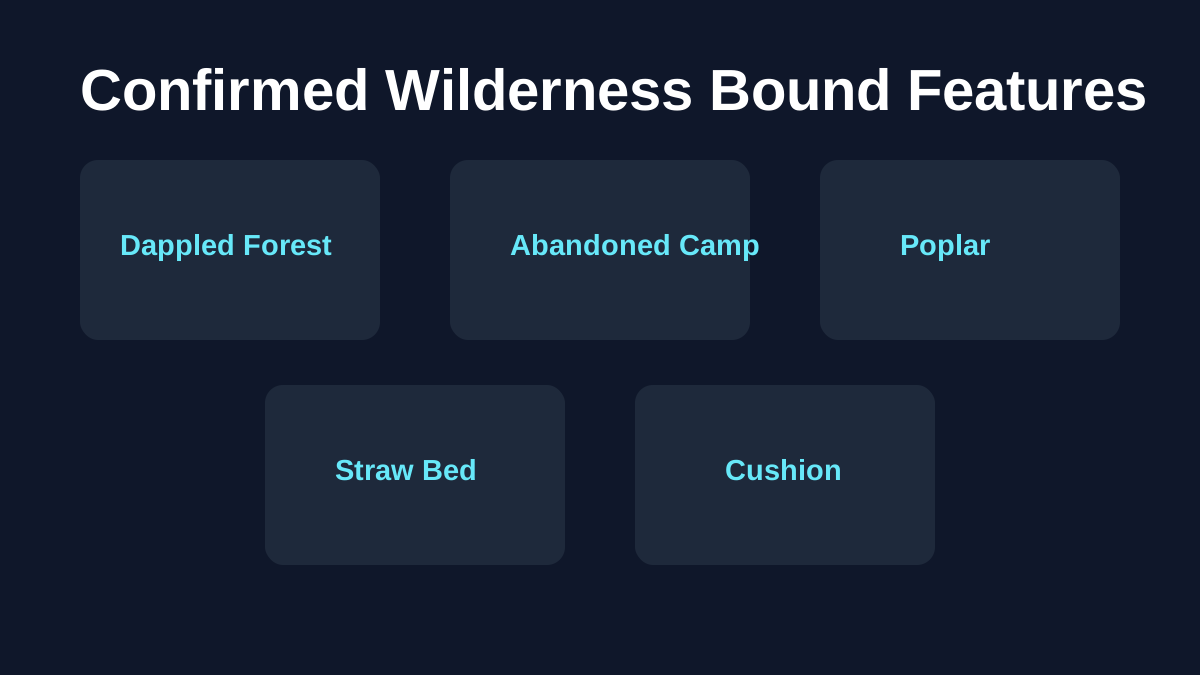
For other camping mechanics, see the Cushion guide, Abandoned Camp guide, and Wilderness Bound features.
Straw Bed recipe
The final Java 26.3 recipe is:
- Input: 3 Hay Bales;
- Output: 4 Straw Beds.
The four-bed output matters because each one can only complete one successful sleep. If you are preparing a multi-night expedition, craft several before leaving rather than expecting one Straw Bed to replace a normal reusable bed indefinitely.
Does a Straw Bed set your spawn point?
No. This is the feature's main purpose. Sleeping in a Straw Bed lets you pass the night without changing your respawn point.
That means you can keep a permanent spawn at your home base while carrying Straw Beds into Dappled Forests, Abandoned Camp searches or long Explorer Map journeys. If you die later, your respawn logic still follows the permanent spawn you established with an ordinary bed or other valid game mechanic rather than the consumed Straw Bed.
Is the Straw Bed reusable?
No. Mojang describes it as single-use. After a successful sleep, the Straw Bed is destroyed.
This creates a resource trade-off. Ordinary beds are better for a permanent outpost because they can be used repeatedly and can establish a spawn point. Straw Beds are better when you specifically want to skip dangerous nights while preserving a distant home spawn.
For a long trip, think of them as consumable supplies like food rather than furniture.
What happens in the Nether or The End?
The final Java 26.3 notes confirm that the Straw Bed cannot be used in the Nether or The End and will be destroyed if you try to sleep on it there. Do not carry one into another dimension expecting it to become a safe alternative to an Overworld bed.
The important practical rule is that the Straw Bed's “safe travel sleep” role is an Overworld exploration feature. It does not bypass dimension restrictions.
Straw Bed vs normal Bed
| Feature | Straw Bed | Normal Bed |
|---|---|---|
| Skips eligible night | Yes | Yes |
| Sets respawn point | No | Yes |
| Reusable after successful sleep | No | Yes |
| Travel-focused | Strongly | Sometimes |
| Nether/End sleep solution | No | No |
The two items therefore serve different jobs. A normal bed is infrastructure; a Straw Bed is consumable travel equipment.
Why is this useful for exploration?
Imagine your permanent base is at world spawn and you are 8,000 blocks away looking for a Dappled Forest. With a normal bed, sleeping along the way changes where you respawn. If the temporary bed is later broken and you die, that can create an awkward recovery situation.
A Straw Bed lets you skip nighttime without making that temporary campsite your new home point. For players who value a carefully managed respawn location, that is a meaningful quality-of-life improvement.
How many should you carry?
Because each Straw Bed is single-use, count expected nights rather than just inventory slots. Four Straw Beds come from one crafting recipe, which is enough for several separate nights if every use succeeds under valid conditions.
For short scouting trips, four may be plenty. For a long map expedition, carry more or plan to rest at permanent bases along the route. Hay Bales are compact bulk resources, so you may also prefer carrying ingredients and crafting beds as needed if you have access to a crafting interface.
Does sleeping always consume it?
Mojang's core rule says it is destroyed after use. For edge cases such as interrupted sleep, multiplayer sleep percentages or a player trying to sleep at an invalid time, behavior can be sensitive to version details. If a technical farm or challenge depends on the exact consumption trigger, verify the edge case in the current stable version rather than relying on old Snapshot 3 footage.
For normal play, assume every successful night skip costs one Straw Bed.
How does it fit Abandoned Camps?
Wilderness Bound's major features share an expedition theme. Abandoned Camps give the world travel landmarks, Explorer Maps point to more destinations, Cushions provide a place to sit, and Straw Beds provide temporary sleep without relocation of spawn.
You do not need to find an Abandoned Camp to craft a Straw Bed—the recipe uses Hay Bales—but the item fits naturally into restored camps or player-made wilderness outposts.
Can Straw Beds be automated?
The item itself is a player sleep interaction, so the useful automation question is mostly about resource supply. Hay Bales are made from wheat, and wheat can be farmed renewably. That means a developed survival world can maintain a large Straw Bed stock without repeatedly seeking rare materials.
The cost is intentionally accessible enough that explorers can treat Straw Beds as consumables.
Tool and breaking behavior
Later 26.3 snapshots continued fixing Straw Bed integration. Snapshot 8 includes a fix for Straw Beds not being broken faster with hoes and a creative-inventory ordering fix. These are not headline features, but they show why early Snapshot 3 footage should not be treated as the final word on every interaction.
The core single-use/no-spawn mechanic, however, remains the defining design.
Java and Bedrock notes
Straw Beds shipped in both Java 26.3 and Bedrock 26.50. The final release behavior is consistent on the core points covered here: three Hay Bales craft four Straw Beds, sleeping does not set spawn, the item is single-use, and attempting to sleep with one in the Nether or the End destroys it.
Bedrock 26.50 also explicitly lists Straw Beds as items that can be found in Abandoned Camps. For edge-case bugs or platform-specific interaction behavior, still match the report to edition and version.
For the overall release-version comparison, see Wilderness Bound on Java vs Bedrock.
Best situations for a Straw Bed
Use one when:
- you are far from your permanent spawn;
- you want to skip nighttime during a long expedition;
- you are following an Explorer Map and do not want to reset home spawn;
- you are scouting new terrain before establishing a permanent base;
- you want lightweight camping supplies for a temporary outpost.
Use a normal bed instead when you want a permanent sleeping location that you can reuse and deliberately make your respawn point.
At a glance
Craft 4 Straw Beds from 3 Hay Bales. Use a Straw Bed in the Overworld to sleep through the night without changing your spawn point. It is consumed after successful use, and trying to use it as a sleep solution in the Nether or The End destroys it instead.
Pair it with the Cushion guide if you are building a complete Wilderness Bound campsite.