The Abandoned Camp is a new surface exploration structure in Minecraft 26.3 and one of the core systems in the Wilderness Bound game drop. Instead of being a single identical campsite copied across the world, the structure has biome-specific variants designed to match the environment where it generates. Camps can contain chests and barrels with loot, and later 26.3 snapshots expanded their importance by adding new Explorer Maps that can point toward other camps and major structures.
That makes an Abandoned Camp more than a decorative ruin. It can function as a waypoint in an exploration chain: discover the camp, search its containers, obtain useful supplies or a map, and use that map to choose the next destination.
Current status: reverified October 1, 2026 against the released Java 26.3 and Bedrock 26.50 changelogs. The final release keeps all 18 eligible biomes, biome-specific variants, chests/barrels and the Explorer Map exploration loop.
Abandoned Camp at a glance
An Abandoned Camp is a Wilderness Bound structure that can generate in 18 supported biomes, with a visual variant adapted to each biome. Camps can contain chests and barrels, Straw Beds, Cushions, and Explorer Maps that extend the exploration loop beyond the structure itself.
If you only want spawn locations, use Every Abandoned Camp Biome. For practical searching, see How to Find an Abandoned Camp. Once you locate one, check Abandoned Camp Loot and Explorer Maps.
Where can Abandoned Camps generate?
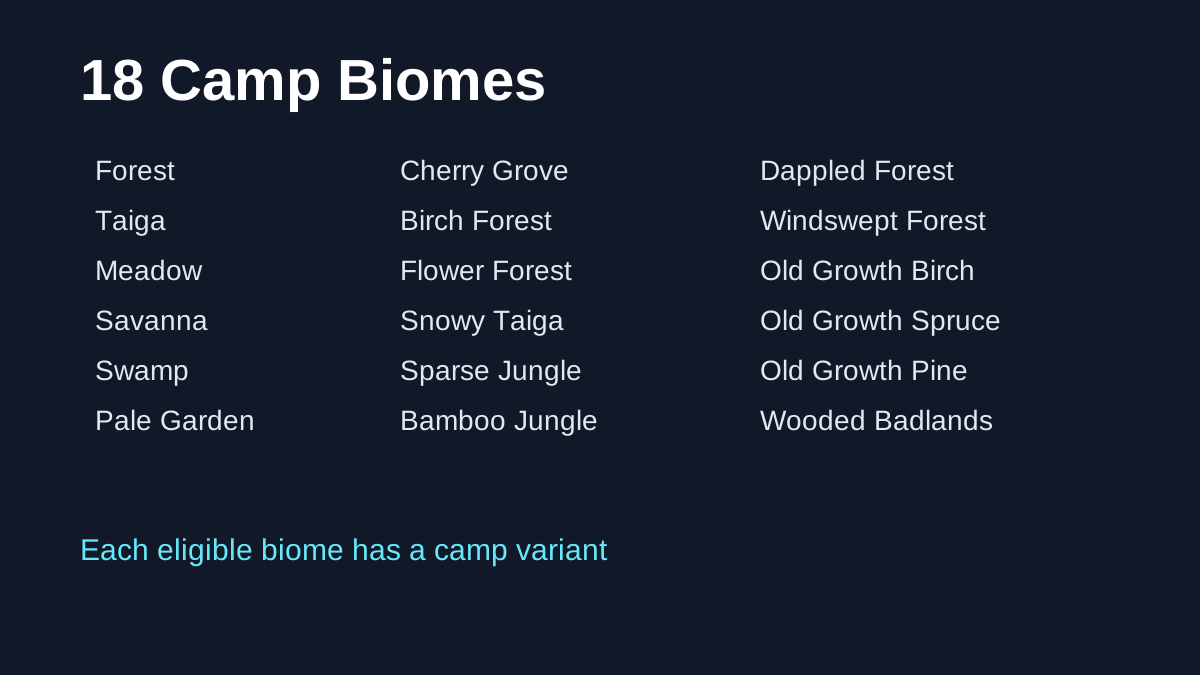
Mojang's initial official list includes the following eligible biomes:
- Meadow;
- Cherry Grove;
- Forest;
- Birch Forest;
- Old Growth Birch Forest;
- Flower Forest;
- Windswept Forest;
- Dappled Forest;
- Taiga;
- Snowy Taiga;
- Old Growth Spruce Taiga;
- Old Growth Pine Taiga;
- Sparse Jungle;
- Bamboo Jungle;
- Swamp;
- Savanna;
- Wooded Badlands;
- Pale Garden.
Each of these biome categories has a camp variant designed around that environment. Snapshot 6 later noted that a new campsite variant had been added for each biome and included minor structure tweaks, reinforcing Mojang's goal of making camps visually contextual rather than identical.
For a compact list without the broader guide, use Every Abandoned Camp Biome.
What does an Abandoned Camp look like?
There is no single silhouette that covers every camp. Biome variation is the point. A camp in a Bamboo Jungle can use a different design language from one in a Pale Garden or Dappled Forest. Mojang also notes that certain structure pieces are generic across variants, so experienced players may learn to recognize recurring campsite elements even when the surrounding materials change.
Because the camps are surface structures, scanning open terrain and biome transitions is usually more useful than digging underground. Dense foliage can still hide them, especially in forested variants.
What loot is inside an Abandoned Camp?
Mojang's final Java 26.3 notes confirm that various chests and barrels with loot can appear at Abandoned Camps. Snapshot 7 remains useful historical evidence for how the loot evolved, including the barrel-table update and the Firework Rocket-to-Gunpowder change in camp chest loot.
That history is why this overview does not present an unofficial fixed percentage chart as permanent. If you are specifically planning around container contents, use the dedicated Abandoned Camp Loot page, where current changes can be tracked without making this general guide obsolete.
Explorer Maps are the camp's biggest long-term value
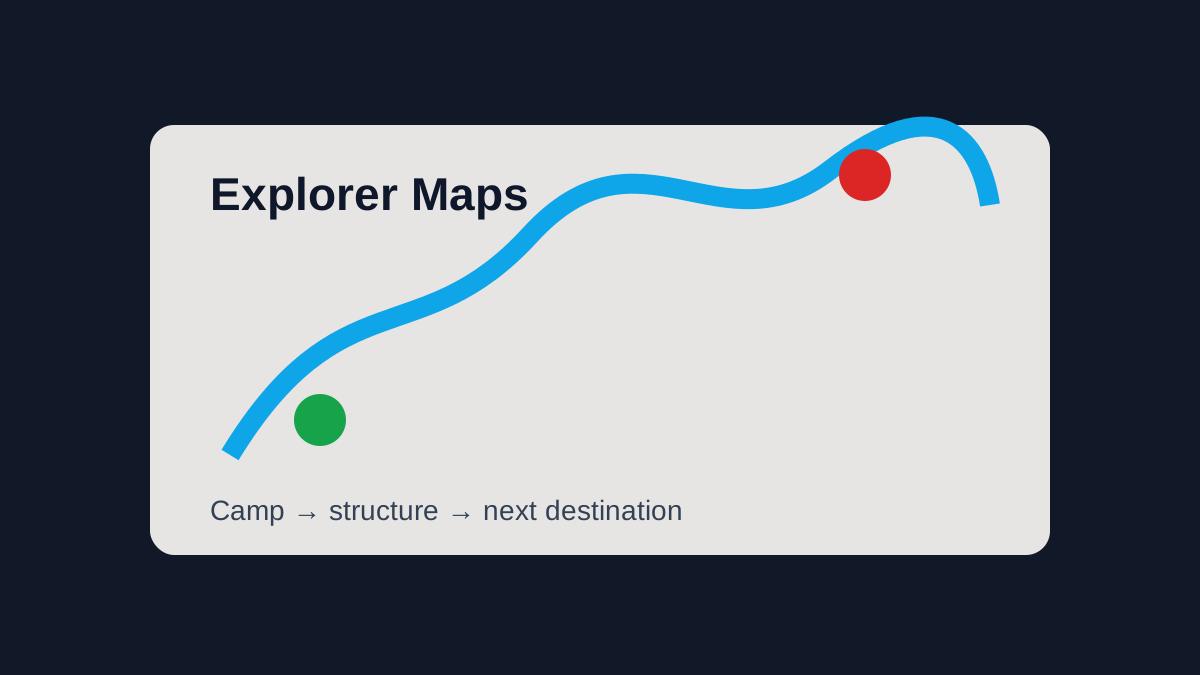
Snapshot 7 added new Explorer Maps to Abandoned Camps. Some maps can point to other Abandoned Camps in selected biomes, including Bamboo Jungle, Cherry Grove, Birch Forest, Dappled Forest, Flower Forest, Pale Garden, Swamp and Windswept Forest.
Other maps can point to major structures:
- Ancient City;
- Trial Chambers;
- Mineshaft;
- Desert Pyramid;
- Jungle Pyramid;
- Warm Ocean Ruins;
- Woodland Mansion.
This transforms a camp from an isolated point of interest into a navigation hub. A player exploring without external seed tools can use an in-game discovery to generate the next objective naturally.
Read Wilderness Bound Explorer Maps for map behavior, destinations and later icon changes.
Are camps guaranteed in every eligible biome?
No. “Can be found in” or “has a variant for” does not mean every individual biome instance must contain one. Structure placement is separate from simply entering an eligible biome. You can explore a Dappled Forest or Savanna without necessarily finding a camp inside that particular patch.
This matters for search strategy. If you have checked one small eligible biome and found nothing, that does not mean the feature is broken. Move into new terrain, search additional eligible biome areas and use long sight lines where possible.
For a practical route, see How to Find an Abandoned Camp.
Why biome variants matter for builders
Even if you do not care about loot, camps can serve as reference builds. Because Mojang adapts the structure to multiple biomes, each variant demonstrates combinations of blocks and camping details that fit a different environment. Players can restore a camp, expand it into a base or use its palette as inspiration for custom wilderness outposts.
The Dappled Forest variant is especially connected to the update's theme because it sits among Poplar trees, Shelf Mushrooms and Red Shrubs. Snapshot 10 even placed a Dappled Forest and Abandoned Camp together in the Java main-menu panorama, making that pairing a visual symbol of 26.3.
Should you move into an Abandoned Camp?
You can treat a found camp as the beginning of a temporary or permanent base, but inspect it first. The structure is not introduced as a protected village. Normal survival threats still apply, and the area may need lighting, repairs and storage before it functions as a safe outpost.
A useful approach is to preserve the original layout, loot the containers, then add practical infrastructure nearby rather than immediately dismantling the entire structure. That keeps the camp's visual identity while giving you a waypoint for later exploration.
How camps connect to Straw Beds and Cushions
Wilderness Bound's camping theme is spread across several systems. Straw Beds let travelers skip the night without setting a new spawn point, while Cushions provide an official sitting interaction. The Bedrock 26.50 release notes explicitly confirm that both Straw Beds and Cushions can also be found in Abandoned Camps.
The mechanics remain separate: finding a camp is not required to craft a Straw Bed, and a Cushion has its own crafting recipe. But together they create a stronger travel-focused update than any one block would provide alone.
Java vs Bedrock notes
Abandoned Camps shipped in both Java 26.3 and Bedrock 26.50. Both final changelogs confirm the same 18 eligible biome categories and biome-specific structure variants, but edition-specific generation bugs or loot implementation details can still differ.
If you are sharing camp coordinates, exact loot behavior or a bug report, include edition and version. For general survival guidance, the final release establishes Abandoned Camps as a stable Wilderness Bound structure rather than a Preview-only feature.
What should you do when you find a camp?
A simple first-visit checklist is:
- save the coordinates;
- inspect all visible camp pieces before breaking blocks;
- search chests and barrels;
- check for Explorer Maps;
- identify the biome variant;
- light the area if you plan to stay after dark;
- decide whether to preserve, restore or convert the campsite.
If a map points to another destination, consider returning home to unload valuable items before beginning the next leg. Explorer Maps can turn one discovery into a much longer expedition.
What matters
Abandoned Camps are important because they connect structure exploration, biome variety, loot and navigation. The individual campsite may be small compared with a Woodland Mansion or Ancient City, but the new Explorer Maps give it strategic value far beyond its footprint.
For the next step, use the camp location guide if you have not found one yet, or go directly to Abandoned Camp Loot if you are already standing inside a campsite and want to know what its containers can offer.