Minecraft 26.3's Abandoned Camps can generate in a wide range of Overworld biomes. The final Java 26.3 and Bedrock 26.50 release notes both list 18 biome categories, and each has a camp variant designed around that environment. Snapshot 6 remains useful history for the late-cycle variant work, while the stable releases are now the baseline.
The eligible-biome list is important for two reasons. First, it tells you where manual searching can actually succeed. Second, it explains why screenshots of different Abandoned Camps may look surprisingly different even though they belong to the same structure family.
All 18 Abandoned Camp spawn biomes at a glance
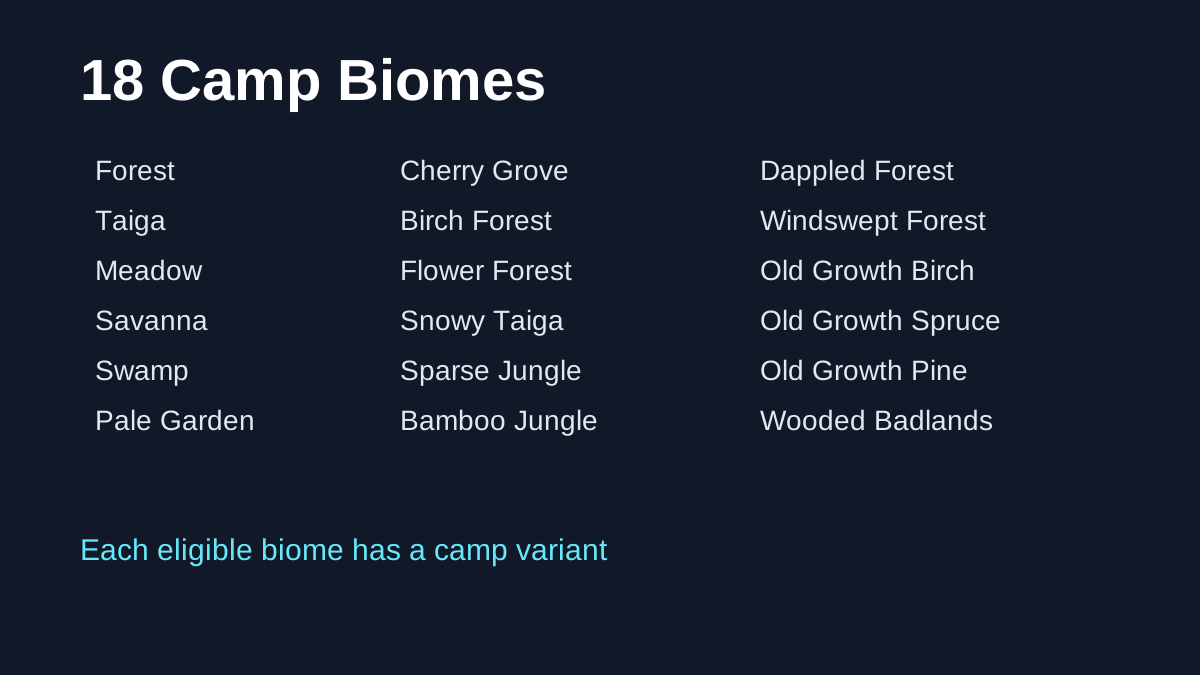
Wilderness Bound supports 18 Abandoned Camp biome variants: Meadow, Cherry Grove, Forest, Birch Forest, Old Growth Birch Forest, Flower Forest, Windswept Forest, Dappled Forest, Taiga, Snowy Taiga, Old Growth Spruce Taiga, Old Growth Pine Taiga, Sparse Jungle, Bamboo Jungle, Swamp, Savanna, Wooded Badlands and Pale Garden.
A supported biome means a camp can generate there; it does not mean every eligible biome contains one. For search strategy, use How to Find an Abandoned Camp. For what to do after finding one, see Abandoned Camp Loot and Explorer Maps.
Full official Abandoned Camp biome list
| Environment | Eligible biome |
|---|---|
| Open / highland | Meadow |
| Blossom | Cherry Grove |
| Temperate forest | Forest |
| Temperate forest | Birch Forest |
| Temperate forest | Old Growth Birch Forest |
| Temperate forest | Flower Forest |
| Mountain forest | Windswept Forest |
| Wilderness Bound | Dappled Forest |
| Cold forest | Taiga |
| Cold forest | Snowy Taiga |
| Old-growth cold forest | Old Growth Spruce Taiga |
| Old-growth cold forest | Old Growth Pine Taiga |
| Jungle | Sparse Jungle |
| Jungle | Bamboo Jungle |
| Wetland | Swamp |
| Warm grassland | Savanna |
| Badlands | Wooded Badlands |
| Pale Garden | Pale Garden |
This list comes from Mojang's Java 26.3 documentation. A biome being eligible does not guarantee that every individual instance of that biome contains a camp.
Why are there so many variants?
Wilderness Bound is an exploration-focused drop, and a campsite that looked identical everywhere would quickly become repetitive. Mojang instead gives camps designs based on their biome. Local palettes and environmental context help a camp in a Bamboo Jungle feel different from one in Snowy Taiga or the new Dappled Forest.
Certain structure pieces can be generic across biome variants, so there is still a shared visual language. The mix of repeated camp elements and local materials makes the structure recognizable without making every discovery identical.
Dappled Forest camp
The Dappled Forest variant is the one most closely associated with Wilderness Bound. It sits among red, orange and yellow Poplar Leaves, Shelf Mushrooms and Red Shrubs. Mojang later used a Dappled Forest with an Abandoned Camp for the Java main-menu panorama in Snapshot 10.
This is not the only valid camp, but it is a strong target if you want to experience several new 26.3 features in one location. The Dappled Forest guide explains the biome's resources separately.
Forest and birch variants
Forest, Birch Forest, Old Growth Birch Forest and Flower Forest all appear on the official list. These can be convenient search areas because many survival worlds encounter them relatively early. Visibility varies: Flower Forest and ordinary Forest terrain can offer better scanning in some seeds, while old-growth areas may have denser or taller tree cover.
Do not assume “Birch Forest” automatically includes every birch-related biome. Mojang explicitly lists the supported variants, which is why keeping the exact names matters.
Taiga and snowy variants
Taiga, Snowy Taiga, Old Growth Spruce Taiga and Old Growth Pine Taiga each have camp support. These variants expand the campsite concept into colder woodland terrain and can make natural travel routes through northern-looking regions more interesting.
For manual searching, climb slopes or large trees where safe and scan clearings. Dense old-growth forest can hide a small surface structure until you are close.
Jungle and swamp variants
Sparse Jungle and Bamboo Jungle are eligible, as is Swamp. Dense vegetation makes visual searching slower, so a systematic path can help. Follow open water, ridges or clearings instead of zigzagging without a plan.
Bamboo Jungle and Swamp are also notable because Snapshot 7 added Explorer Maps that can point to camp variants in those biomes. Once you find one camp elsewhere, map-based exploration may make a specific destination easier to locate.
Savanna, Meadow and Wooded Badlands
More open biomes can be favorable for ordinary visual searches. Savanna and Meadow often provide long sight lines, while Wooded Badlands mixes elevated terrain with vegetation. Even if generation probability is not officially published, visibility alone can make these areas feel easier to search than dense jungle or swamp.
This is a practical search advantage, not evidence that camps are more common there.
Pale Garden variant
The Pale Garden appears on the supported list and later became one of the camp destinations available through new Explorer Maps. Its distinctive palette makes the environmental variant especially recognizable.
As with every other biome, a Pale Garden existing in your world does not mean a camp must be inside that particular patch.
Which camp biomes can Explorer Maps point to?
Snapshot 7 added maps showing the location of Abandoned Camps in a subset of the full camp-biome list:
- Bamboo Jungle;
- Cherry Grove;
- Birch Forest;
- Dappled Forest;
- Flower Forest;
- Pale Garden;
- Swamp;
- Windswept Forest.
This is easy to misunderstand. All 18 listed biomes can support Abandoned Camps, but only the selected destinations above were named in Snapshot 7's new camp Explorer Map list. Do not turn the map subset into an incorrect generation subset.
For the full map system, use Wilderness Bound Explorer Maps.
Are biome variants equally common?
Mojang has not published a player-facing table giving exact percentage odds for each variant. Search results that claim precise universal rarity numbers should therefore be checked for methodology and version.
World seed and eligible terrain distribution have a huge practical impact. A seed with enormous taiga regions gives you more taiga surface to search than a seed where the biome appears only in small patches.
Can camps appear in old chunks?
Structures introduced by an update generally require terrain that is generated with the new rules. If an eligible biome near your base was fully generated before 26.3, you should not expect the game to retrofit a new camp into the existing chunk layout.
Travel into newly generated territory in an upgraded world. On stable Java 26.3 / Bedrock 26.50 or later, use your normal backup routine; the stronger corruption warning applies if you intentionally load old snapshots or previews.
Best biomes for manual searching
There is no official “best” biome by spawn chance, but players can choose based on visibility. Meadow and Savanna can be efficient to scan. Dappled Forest is valuable because you can collect new resources at the same time. Dense Bamboo Jungle or Swamp may take longer to check thoroughly.
A practical player can therefore optimize search effort without pretending to know hidden placement odds.
Final reference rule
Remember the difference between three facts:
- 18 biome categories are officially eligible for camps.
- Each eligible biome has its own camp variant.
- Only a subset of camp biomes are named as camp Explorer Map destinations.
Keeping those facts separate prevents most confusion around Abandoned Camp generation. If your goal is finding one rather than studying the list, continue with How to Find an Abandoned Camp.