The released Minecraft 26.3 build expands Explorer Maps through the new Abandoned Camp structure. The final release keeps the camp and structure destinations introduced during Snapshot 7, giving Wilderness Bound a stronger exploration loop: one discovery can reveal the next destination without requiring an external seed map.
The new maps are especially important because Abandoned Camps are small surface structures. Their reward is not only what is sitting in a chest or barrel; a map can turn the campsite into the starting point for a much larger expedition.
Which Explorer Maps can Abandoned Camps contain?
Abandoned Camps can lead players toward other camp variants and major structures. The 26.3 map pool includes destinations such as Ancient Cities, Trial Chambers, Mineshafts, Desert Pyramids, Jungle Pyramids, Warm Ocean Ruins and Woodland Mansions, plus maps to selected Abandoned Camp biome variants.
That makes camps a navigation hub rather than a one-time loot stop. Start with the Abandoned Camp guide, check the loot guide, and use How to Find an Abandoned Camp if you have not located your first camp yet.
New Abandoned Camp map destinations
The final Java 26.3 notes confirm Abandoned Camp maps for these eight biome variants:
- Bamboo Jungle;
- Cherry Grove;
- Birch Forest;
- Dappled Forest;
- Flower Forest;
- Pale Garden;
- Swamp;
- Windswept Forest.
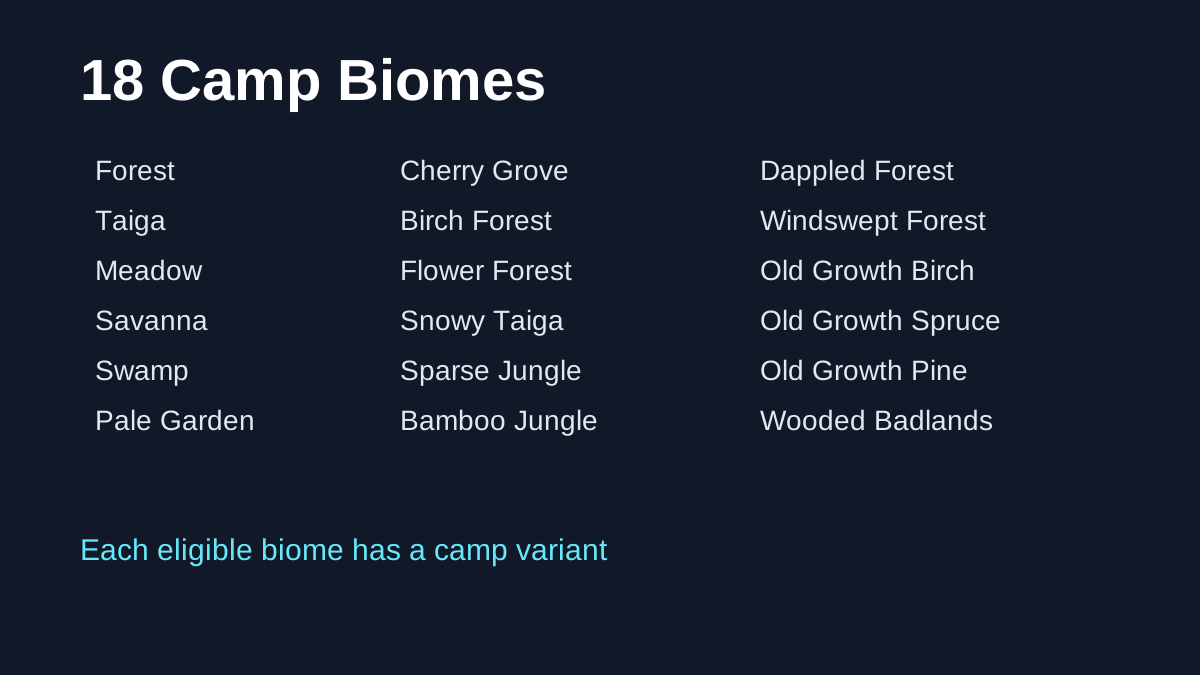
These eight destinations are a subset of all biomes where camps can generate. Do not confuse the map list with the full generation list. Camps can also exist in other eligible biomes documented in Snapshot 1.
If you want every camp biome, use Every Abandoned Camp Biome.
New structure map destinations
The final Java 26.3 release also confirms maps for:
- Ancient City;
- Trial Chambers;
- Mineshaft;
- Desert Pyramid;
- Jungle Pyramid;
- Warm Ocean Ruins;
- Woodland Mansion.
That destination mix covers underground, surface and ocean exploration. It also gives players in ordinary survival another path toward structures that can be frustrating to locate manually.
Where do you get the new maps?
Mojang says the new Explorer Maps were added to Abandoned Camps. In practical terms, search the camp's loot containers and do not leave after opening only the first visible chest. Camps can contain various chests and barrels, and the structure layout varies by biome.
A map is not something you craft from an ordinary empty map and magically choose a destination for. The destination is tied to the Explorer Map item you obtain.
Are maps guaranteed at every camp?
The official notes do not say every camp guarantees a map. “Added to Abandoned Camps” describes the loot source, not a 100% drop statement. One camp without a map should therefore not be treated as proof of a bug.
Search all containers and be prepared to visit multiple camps if you are hunting a particular map type.
Explorer Maps are distinct item types in the final release
Java 26.3 makes Explorer Maps their own item types instead of renamed Filled Maps, and each has a dedicated icon. The final release also standardizes several names, including Woodland Mansion Map, Buried Trial Chambers Map, Jungle Pyramid Map, Buried Ancient City Map, Buried Mineshaft Map, Desert Pyramid Map, Abandoned Camp Map and Warm Ocean Ruins Map.
Existing Explorer Maps in old worlds are converted to the matching item when loaded. Explorer Maps can still be cloned in a Crafting Table, and the copies keep the same item type and destination.
A major final rule is that Explorer Maps and Buried Treasure Maps cannot be zoomed out in either a Crafting Table or Cartography Table. That is released 26.3 behavior, not merely a Snapshot 7 experiment.
How to use an Explorer Map effectively
Once you obtain a map, first identify the destination before immediately running away from the camp. Prepare food, tools, armor and inventory space based on the target. An Ancient City expedition has different risk from traveling to a Flower Forest camp.
Mark the camp coordinates as a fallback. If the map journey is long, you may want to use the campsite as temporary storage, return home to unload loot, or create a safer travel route before committing.
For multiplayer, cloning a useful map can let multiple players keep a copy. Coordinate who carries valuable gear so one death does not end the expedition.
Why maps improve vanilla exploration
Many experienced Minecraft players use online seed viewers because finding a specific structure can otherwise take a long time. Explorer Maps provide an in-game alternative. They do not remove travel; they give direction.
That fits the Wilderness Bound theme well. The player still has to cross terrain, survive the journey and identify the destination, but the game can transform a random campsite discovery into a purposeful route.
Which map is most valuable?
Value depends on your world and progression.
- Ancient City Map: useful if you want sculk-related content or Ancient City loot but have struggled to locate one.
- Trial Chambers Map: useful for players pursuing Trial Chamber progression.
- Woodland Mansion Map: can save substantial blind travel in some seeds.
- Camp maps: useful if your goal is seeing multiple Wilderness Bound camp variants.
- Pyramid or Ocean Ruins maps: useful when your current region lacks obvious examples of those structures.
A map to a structure you already discovered near base may have little value, while the same map can be transformative in another world.
Does the map reveal an exact safe route?
No. Explorer Maps point toward a destination; they do not promise a safe path. Terrain, oceans, cliffs, hostile mobs and nighttime still matter. Treat the map as navigation, not teleportation.
For underground targets, reaching the correct horizontal area may only be the beginning. Bring appropriate equipment and expect vertical searching or dangerous environments.
Can you copy Explorer Maps?
Snapshot 7's map changes include the ability to clone Explorer Maps in a crafting table. Cloning is useful for multiplayer groups or backup copies. It does not create a new random target; copies correspond to the same mapped destination.
If a map is rare in your current world, make a copy before carrying the only one into a high-risk expedition.
Final names and icons
The stable 26.3 release is now the reference point for Explorer Map names and icons. Older Snapshot 7 screenshots can show earlier names such as “Trial Chambers Explorer Map” or “Woodland Mansion Explorer Map”; the final Java names use Buried Trial Chambers Map and Woodland Mansion Map.
When an older video disagrees with the released UI, use the 26.3 final names above rather than treating the snapshot label as current.
Java vs Bedrock
Explorer Maps are part of the released Wilderness Bound feature set on both Java 26.3 and Bedrock 26.50. Bedrock 26.50 confirms new item icons and camp-chest Explorer Maps, while Java 26.3 provides the detailed final item-name, cloning and no-zoom rules listed above.
For technical map behavior, match the rule to the edition you are actually playing instead of assuming every Java implementation detail is identical on Bedrock.
Explorer Map checklist
When you find one at a camp:
- read the destination;
- save camp coordinates;
- clone the map if it is important or you are in multiplayer;
- prepare gear for the target structure;
- unload unrelated valuables;
- follow the map while watching ordinary survival risks;
- record the destination coordinates for future trips.
What matters most
The new Explorer Maps give Abandoned Camps a reason to matter after their immediate loot is gone. A campsite can become a navigation node that points to another camp or a major structure, preserving the feeling of discovery while reducing completely blind searching.
If you still need your first map source, start with How to Find an Abandoned Camp. If you already found a camp and want to understand its other container rewards, use Abandoned Camp Loot.