Wilderness Bound is available on both Minecraft Java Edition and Bedrock Edition. The game drop released on September 15, 2026, but the editions use different version numbers: the stable Java release is 26.3, while the Bedrock release is 26.50.
That version-number difference is the first thing to understand when comparing guides. “Minecraft 26.3” is a Java version. Bedrock players should look for the 26.50 release and later Bedrock hotfixes rather than trying to match Java's number.
Which version should Java and Bedrock players use?
If you play Java Edition, Wilderness Bound is 26.3. If you play Bedrock Edition, the matching launch version is 26.50, followed by Bedrock hotfixes. The major Wilderness Bound content is shared, but version numbers and some implementation details differ.
For a feature-first overview, see Minecraft 26.3 and Wilderness Bound features. If you are troubleshooting exploration differences, compare the Dappled Forest location guide and Abandoned Camp guide.
Java vs Bedrock at a glance
| Topic | Java Edition | Bedrock Edition |
|---|---|---|
| Wilderness Bound release | September 15, 2026 | September 15, 2026 |
| Stable game-drop version | 26.3 | 26.50 |
| Dappled Forest | Released | Released |
| Abandoned Camps | Released | Released |
| Poplar family | Released | Released |
| Straw Beds and Cushions | Released | Released |
| Wool / Concrete variants | Released | Released |
| Post-launch line | Java moved to 26.4 snapshots | 26.51 and 26.52 hotfixes followed |
What is the Java version of Wilderness Bound?
Java Edition 26.3 is the stable Java release for Wilderness Bound. The development cycle began with Snapshot 1, which introduced the Dappled Forest, Poplar ecosystem, Abandoned Camps and Wool stairs/slabs. Later snapshots added Cushions, Straw Beds, Concrete variants and the expanded Explorer Map system.
After pre-releases and three release candidates, the final 26.3 build shipped on September 15. Java development then moved on: 26.4 Snapshot 1 was published September 22.
That means an old tutorial telling you to enable snapshots to access the Dappled Forest is now outdated for normal play. Use the stable Java installation unless you specifically want to test newer 26.4 development.
For the full development history, see Minecraft 26.3.
What is the Bedrock version?
Bedrock Edition 26.50 is the stable Bedrock release for Wilderness Bound. Mojang's Bedrock changelog marks the game drop as out now and documents the same headline exploration and building theme: Dappled Forests, Abandoned Camps, Poplar trees, Straw Beds, Cushions and related features.
Bedrock then received post-launch hotfixes. Version 26.51 addressed a crash found after the update. Version 26.52, released September 25, fixed several issues including Cushions disappearing after the chunk containing them unloaded and reloaded.
Because Bedrock hotfixes can roll out by platform approval, a device can briefly lag behind another device even when they share the same overall game-drop release.
Which major features are shared?
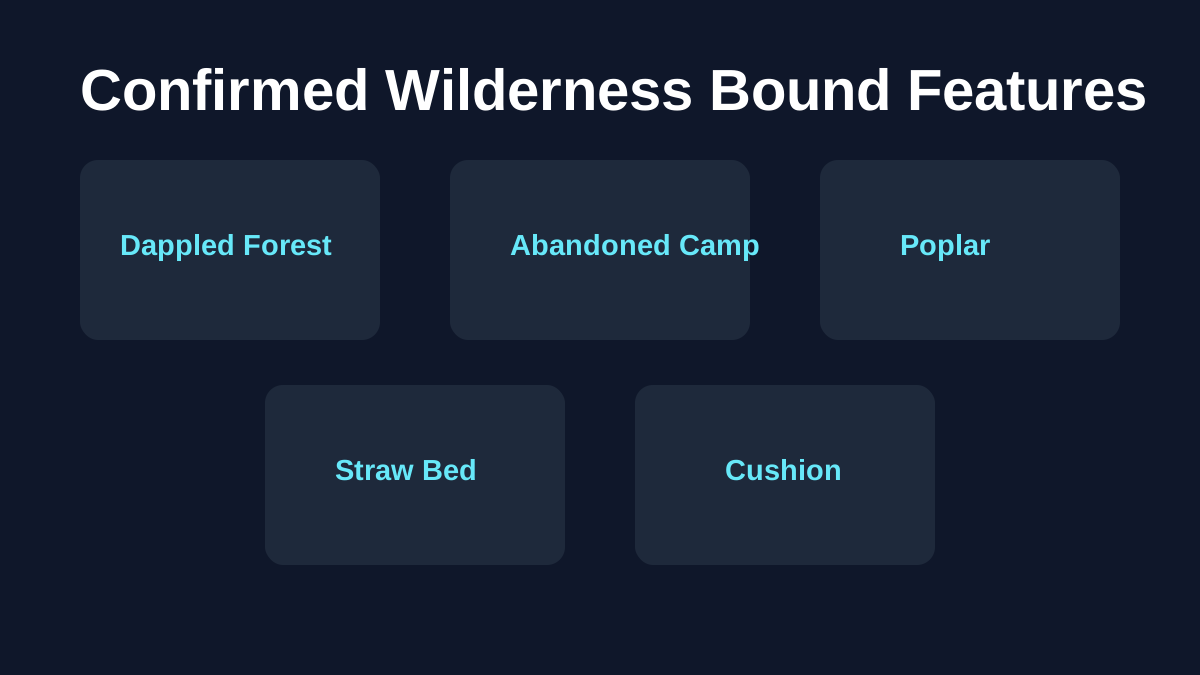
The core Wilderness Bound experience is shared across Java and Bedrock:
- Dappled Forest;
- Poplar trees and colored Poplar leaves;
- Poplar wood family;
- Shelf Mushrooms and Red Shrubs;
- Abandoned Camps;
- expanded Explorer Maps;
- Straw Beds;
- Cushions;
- Wool stairs and slabs;
- Concrete stairs and slabs.
For a player deciding whether an article applies to both editions, these high-level features are a safe starting point. Edition-specific bugs, exact technical identifiers, commands, tags, structure implementation details and hotfix timing still deserve separate verification.
Does the Dappled Forest work the same way?
Both released editions include the Dappled Forest as a Wilderness Bound biome. Mojang's feature documentation describes it as associated with the Poplar ecosystem and positioned near cold-biome regions.
Seed-specific terrain is a separate issue. Java and Bedrock are different codebases and should not be assumed to generate every coordinate identically. When using a seed guide or locate command, match the guide to the edition and current version.
For normal exploration advice, see How to Find a Dappled Forest.
Are Abandoned Camps the same on both editions?
Both editions received Abandoned Camps as part of the released game drop. The broad concept is shared: surface structures with biome-specific variants, containers and exploration value.
Exact loot implementation, structure-generation bugs or platform-specific fixes can still differ. A Java loot-table observation should not automatically be converted into a Bedrock percentage, and a Bedrock bug should not be presented as a Java bug without separate evidence.
Use the Abandoned Camp guide for the shared structure concept and Abandoned Camp Loot for version-sensitive container details.
Do recipes match?
The main player-facing recipes are designed around the same Wilderness Bound features, but edition-specific verification is still the safest approach when a recipe or output count matters.
For example, Straw Beds and Cushions are released features in both editions. If your current UI does not show the expected recipe, first check your exact version rather than relying on a screenshot from an old Java snapshot or Bedrock Preview.
The focused Straw Bed and Cushion pages document the current guide baseline.
Why do old guides mention Preview and snapshots?
Before September 15, Java players used 26.3 snapshots/pre-releases and Bedrock players used Preview/Beta builds to test Wilderness Bound. Those development builds remain useful historical evidence because they show when a feature or bug changed.
They are no longer the correct answer to “How do I play Wilderness Bound?” The normal stable releases now contain the game drop.
When an old guide disagrees with the released game, prefer the final Java 26.3 or Bedrock 26.50 changelog and any later edition-specific hotfix.
Which edition has newer post-release changes?
The version lines have already diverged after launch. Java began the 26.4 snapshot cycle on September 22. Bedrock instead received 26.51 and 26.52 hotfixes while also continuing its own Preview/Beta work.
That does not mean one edition has a “newer Wilderness Bound” in a simple sense. It means bug fixes and future development are tracked differently.
If you are troubleshooting a specific behavior, include all three pieces of information: edition, version and platform.
Bottom line
For Wilderness Bound itself, use Java 26.3 or Bedrock 26.50 as the release baseline. The game drop launched on both editions on September 15, 2026. Shared feature guides can cover the major gameplay concepts, while technical behavior and post-launch bugs should stay tied to the edition where they were verified.
Use Wilderness Bound Release Date for the launch timeline and Wilderness Bound Features for the complete player-facing feature list.