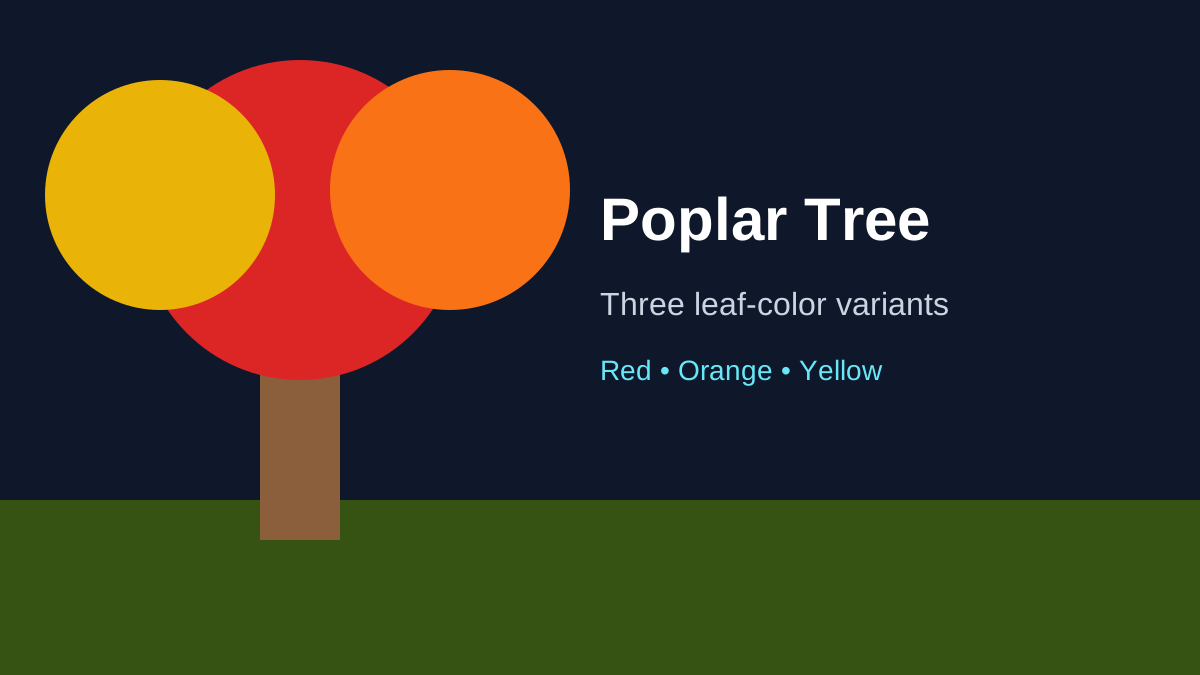
The Poplar wood set is the new wood family introduced with Poplar trees in Minecraft 26.3. Poplar Logs grow naturally as the trunks of red-, orange- and yellow-leaved Poplar trees in the Dappled Forest, and Mojang confirms that those logs can be crafted into a new set of Poplar wood blocks.
For builders, Poplar is one of Wilderness Bound's most durable additions because the resource stays useful long after the excitement of finding the new biome wears off. Once you bring home Poplar Saplings and establish a farm, the wood becomes renewable like other tree-based building materials.
Poplar wood set at a glance
The Poplar wood set is the building-material side of the Dappled Forest update. Harvest natural Poplar trees for your first logs, then switch to renewable farming so large builds do not depend on repeatedly clearing the biome.
For the source tree and biome, see Minecraft Poplar Tree and Dappled Forest. For renewable supply, use the Poplar Sapling guide.
How do you get Poplar wood?
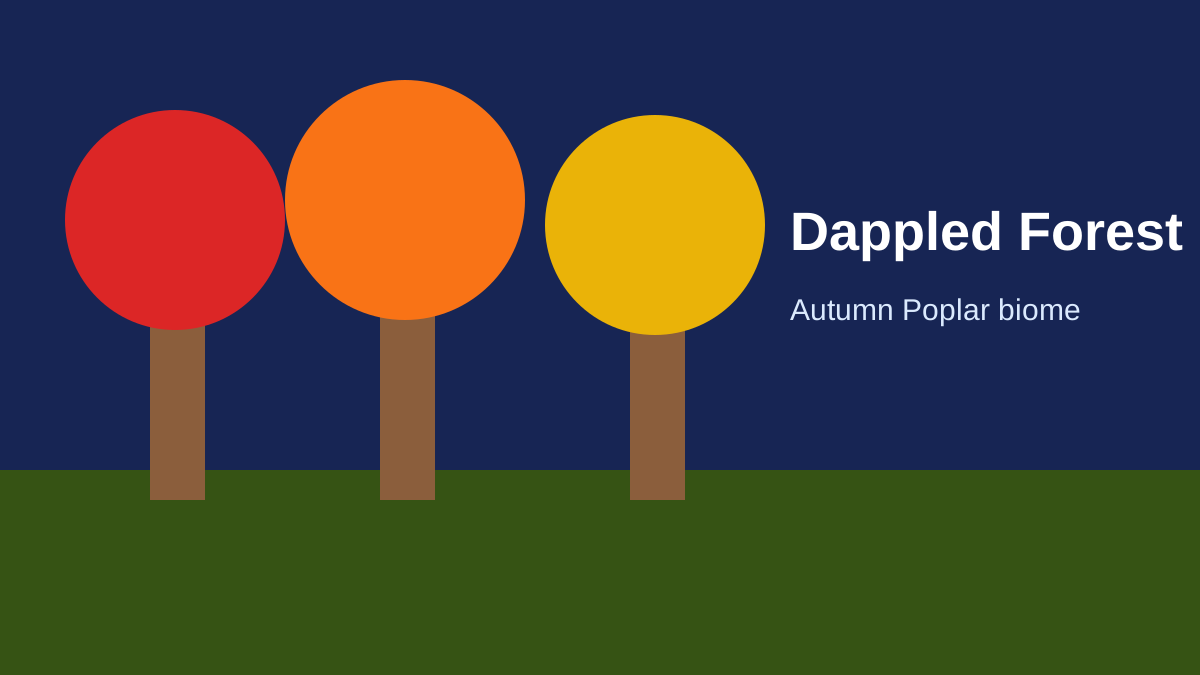
The direct route is to find a Dappled Forest and harvest Poplar Logs. The biome contains standing Poplar trees and naturally fallen Poplar trees. All three foliage-color variants use the same Poplar log family, so you do not need to search for a specific red, orange or yellow tree to obtain a different type of wood.
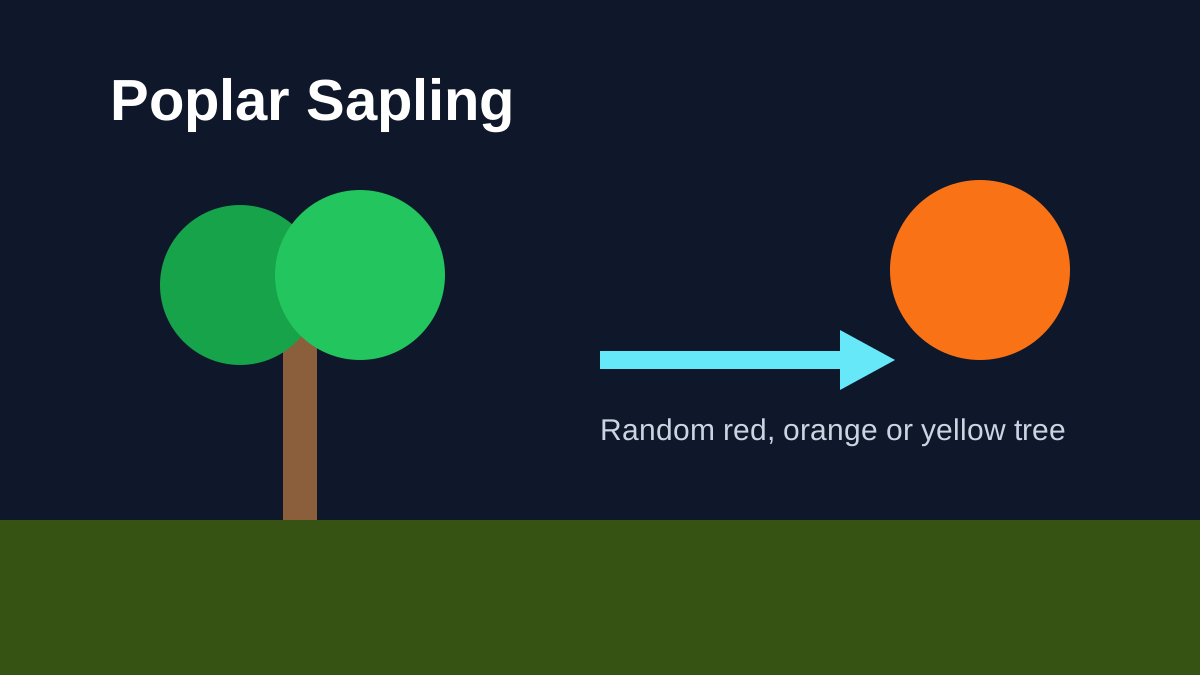
For long-term building, collect Poplar Saplings before leaving. A sapling can grow into any of the three leaf-color variants, but the trunk still supplies the same Poplar material.
Use Minecraft Poplar Tree Guide if you need the tree-generation and farming details.
Is Poplar wood renewable?
Yes. Poplar Leaves can drop Poplar Saplings, and those saplings grow into new Poplar trees. Mojang also added Poplar Saplings to possible Wandering Trader trades, giving players another route to a starter tree.
A renewable farm changes the economics of the material. Instead of treating the Dappled Forest as a quarry, you can collect several saplings, grow trees near your base and reserve the natural biome for scenery or exploration.
What makes Poplar different from the leaf colors?
The autumn color is stored in the leaves, not in separate red/orange/yellow wood families. A tree can have Red Poplar Leaves, Orange Poplar Leaves or Yellow Poplar Leaves while still using Poplar Logs.
That separation is useful for design. You can use one consistent wood tone while mixing three foliage colors around it. It also keeps inventory complexity lower than an update that introduced three complete wood sets.
What blocks are in the set?
The final Java 26.3 and Bedrock 26.50 notes confirm a Poplar wood set rather than only a single plank block. In Minecraft, that means the new tree supports the normal family of construction pieces associated with a wood type. This guide focuses on the released family rather than treating an early snapshot inventory layout as authoritative.
At minimum, players should think of Poplar as a full construction material rather than a decorative log with no matching building pieces.
Building style and color pairing
Poplar's biggest design advantage is its relationship with the Dappled Forest palette. The wood can be paired with:
- red, orange and yellow Poplar foliage;
- Red Shrubs;
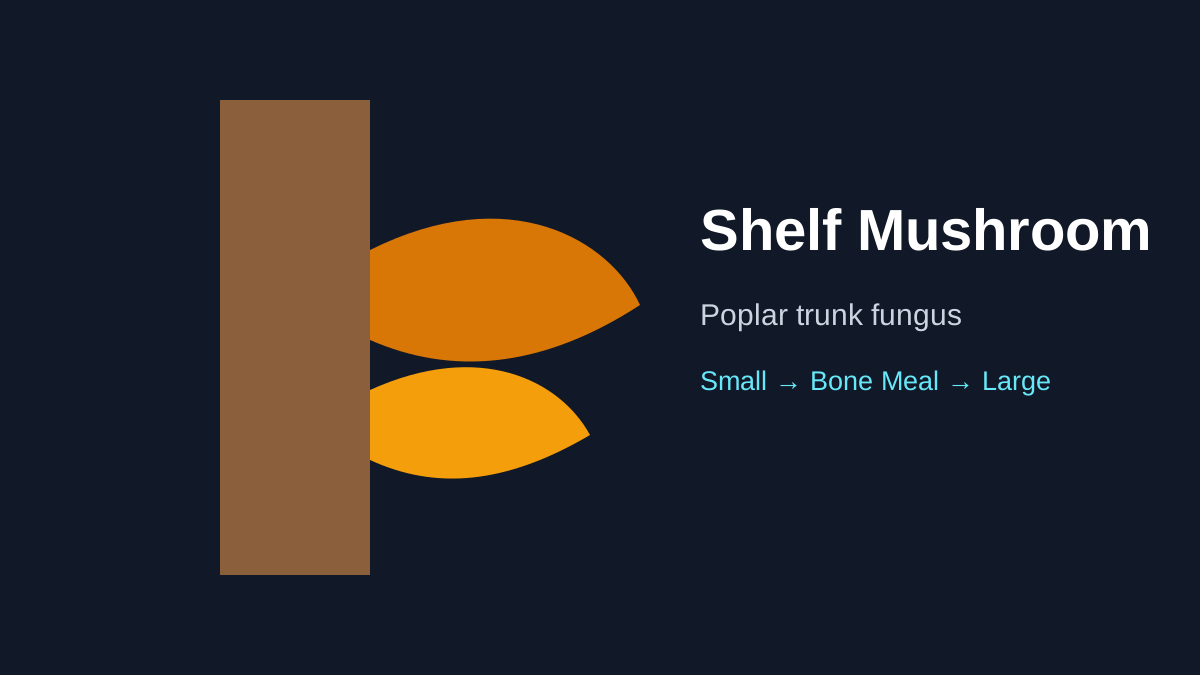
- Shelf Mushrooms;
- Wool Stairs and Slabs;
- Cushions in 16 wool colors;
- Concrete Stairs and Slabs in 16 concrete colors.
This makes Wilderness Bound unusually builder-friendly. You can create a campsite, autumn cabin or woodland village using several new shapes and textures from the same drop.
Good survival uses
A new wood family does not need a special combat mechanic to be valuable. In survival, renewable wood is one of the most frequently consumed resources in the game. Poplar can support ordinary construction, storage infrastructure and decorative projects while giving those builds a visual identity distinct from older wood types.
If you discover the biome early in a world, a local Poplar supply can become your primary building wood. If you find it late, it is more likely to serve as a design accent or collection material.
How many saplings should you collect?
Bring home more than one if possible. A single sapling can technically begin a renewable supply, but multiple saplings reduce the risk of a poor early leaf-drop cycle and let you grow enough trees to harvest building quantities quickly.
Because saplings can grow into random foliage colors, a larger farm also helps if you want all three leaf variants represented around your build.
Does Poplar wood burn or work as fuel?
Early snapshots contained several implementation bugs around new blocks. Snapshot 2 specifically fixed Poplar Saplings not being usable as fuel and corrected tagging issues. That history matters: if an old Snapshot 1 guide says a basic wood-related behavior did not work, verify whether it was simply an early bug.
For technical fuel values or tags, use the current stable build rather than treating an early snapshot bug as intended design.
Poplar wood versus harvesting natural fallen trees
Fallen Poplar trees are convenient free logs when you first arrive, but they are not the renewable system. Sapling-grown standing trees are what make large-scale use sustainable.
If you want the Dappled Forest to keep its natural atmosphere, take a small amount of fallen wood and saplings rather than clearing every standing tree. A home farm can provide bulk logs later.
Can you grow Poplar outside the Dappled Forest?
The important survival behavior is that Poplar Saplings can be planted and grown, allowing the tree to be farmed away from its native biome when normal growth conditions are met. The resulting foliage color is random among the three Poplar variants.
This is ideal for bases because you can import the resource instead of building permanent infrastructure around the original forest.
Java and Bedrock considerations
Poplar shipped as part of Wilderness Bound in Java 26.3 and Bedrock 26.50. When a recipe, tag or fuel interaction matters to a technical build, check the exact edition and stable version because implementation details can still differ across platforms or later patches.
Best way to use the new wood family
Treat your first Dappled Forest trip as a resource-unlock expedition rather than a bulk logging operation. Bring back saplings, start a tree farm, and then generate the volume of Poplar Logs you need close to home. This protects the natural biome, saves travel time and gives you repeated chances to grow all three leaf colors.
For the farming side, continue with Poplar Sapling: How to Get & Grow. For the broader biome palette, use the Dappled Forest guide.