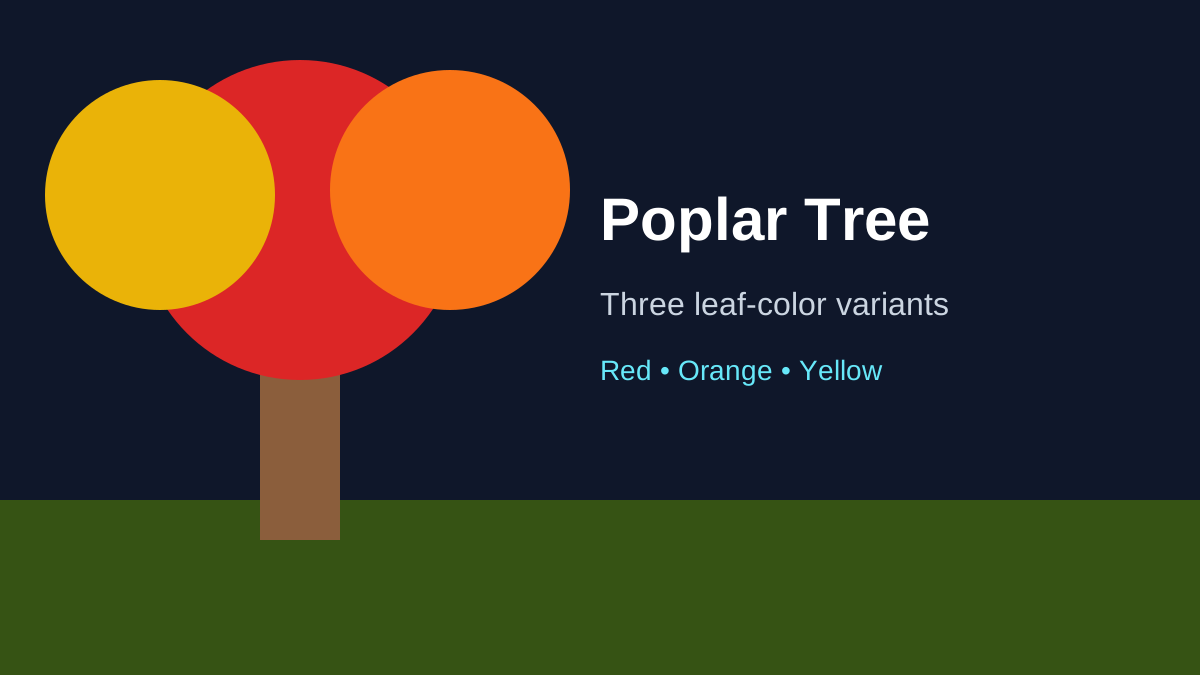
The Poplar tree is the signature tree of Minecraft's new Dappled Forest biome and the source of the Wilderness Bound update's new Poplar wood family. Unlike a normal tree type with one foliage color, Poplar trees appear with red, orange or yellow leaves, giving the biome its autumn identity. All three variants use Poplar Logs for their trunks, and all can provide the same Poplar Sapling item.
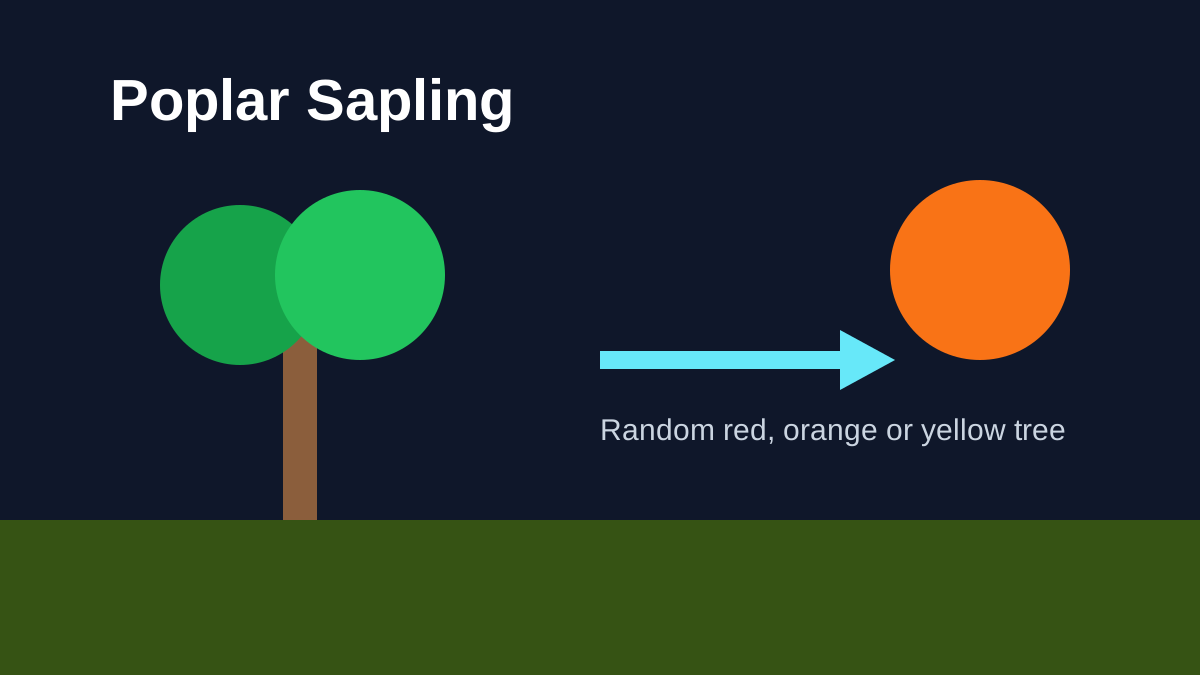
That last detail makes the tree especially convenient for survival builders. You do not need to collect three separate sapling types. A Poplar Sapling can grow into any of the three foliage-color variants at random, so a renewable farm can eventually create the full autumn palette outside the Dappled Forest.
Poplar Tree at a glance
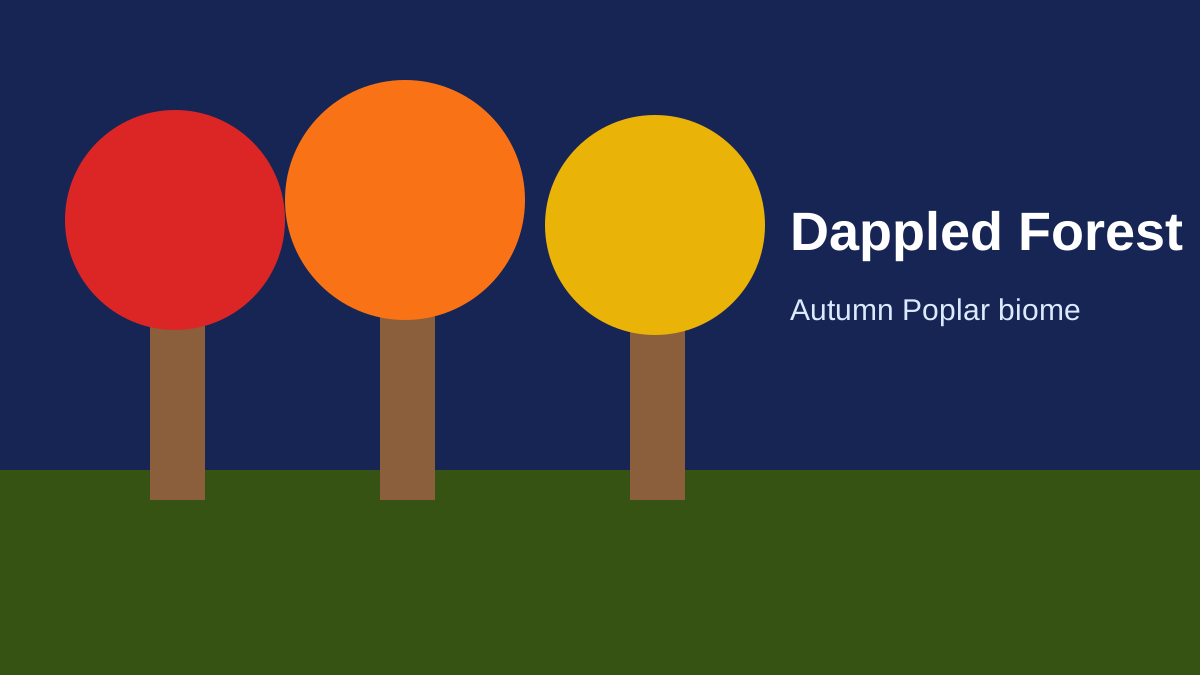
Poplar trees are the signature trees of the Dappled Forest. They use red, orange or yellow Poplar Leaves and provide the renewable source for the new Poplar wood family. Fallen Poplar trees can also appear naturally in the biome.
To locate the native biome, use How to Find a Dappled Forest. For renewable growing, see Poplar Saplings, and for building blocks see the Poplar Wood Set.
Where do Poplar trees grow naturally?
Poplar trees and fallen Poplar trees generate in the Dappled Forest. Mojang describes that biome as a forest found near cold biomes. If you have not located one yet, use How to Find a Dappled Forest before searching for individual trees.
Standing trees form the colorful canopy, while fallen Poplar trees add deadwood and mushroom habitat at ground level. Shelf Mushrooms can generate on both standing and fallen Poplar forms.
Three leaf colors, one tree family
Mojang added three leaf blocks:
- Red Poplar Leaves;
- Orange Poplar Leaves;
- Yellow Poplar Leaves.
Each variant has matching falling-leaf particles. The particles are a visual detail rather than a separate collectible resource, but they are a major reason Poplar groves look different from existing forests.
The leaf colors are not tied to three separate sapling items. Poplar Leaves drop Poplar Saplings, and the sapling grows into one of the three variants randomly. That means a single farm can produce a mixed autumn grove over time.
How do you get Poplar Saplings?
The main natural route is breaking or allowing Poplar Leaves to decay so they can drop Poplar Saplings. Mojang also says Poplar Saplings can appear in Wandering Trader trades.
This gives players two acquisition paths:
- find a Dappled Forest and collect saplings directly;
- encounter the relevant Wandering Trader offer.
The first route also gives you access to the biome's other resources, so it remains the better option if you are actively exploring Wilderness Bound.
What grows on Poplar trees?
Shelf Mushrooms naturally generate on Poplar trees and fallen Poplar trees. They come in small and large forms, can be grown with Bone Meal, can be used in stews, and have slight bounciness when stepped on.
Leaf Litter can also naturally generate on or around Poplar trees according to the Snapshot 1 notes. Together with Red Shrubs on the forest floor, these details make a natural Poplar grove more complex than a simple log-and-leaf tree farm.
What can Poplar Logs be used for?
Poplar Logs can be crafted into the Poplar wood set. The new family gives builders a fresh material palette for ordinary wood construction. Rather than repeating the entire block family here, the dedicated Poplar Wood Set page covers the building side of the tree.
For farming, the important point is that growing more trees gives you a renewable source of Poplar Logs. Once you have enough saplings, you no longer need to repeatedly harvest the natural Dappled Forest.
How to start a Poplar tree farm
A simple survival approach is:
- find a Dappled Forest;
- collect multiple Poplar Saplings before cutting many trees;
- return to a clear growing area near your base;
- plant saplings with sufficient room for tree growth;
- harvest mature Poplar Logs and allow leaves to provide replacement saplings;
- replant until your sapling stock is comfortably positive.
Because the foliage color is random, leave room for multiple trees if your goal is an attractive mixed-color grove. If you only grow one tree at a time, it may take several cycles before you see all three colors.
Can you choose the leaf color?
The official Snapshot 1 behavior says a Poplar Sapling will randomly grow into any of the three variants. That means the sapling itself does not provide a simple color-selection interface.
If you are planning a build that needs mostly red or mostly yellow foliage, grow extra trees and keep the variants that fit your design. The stable release still documents random color selection, so do not assume an unofficial trick can force a specific color unless it is verified in the current build.
Are Poplar trees renewable?
Yes. Leaf drops provide saplings, and those saplings grow into new Poplar trees. This is the key resource loop for the wood family. Wandering Trader access gives another way to acquire a starter sapling, but a functioning tree farm should not require continued trader purchases.
Snapshot 2 also fixed several early Poplar-related issues, including sapling tags and fuel behavior. That is a reminder to check the version when an early Snapshot 1 video shows something behaving strangely.
Do fallen Poplar trees regrow?
Fallen Poplar trees are part of natural biome generation, not a special growth form that a sapling intentionally creates for farming. Plant saplings for ordinary renewable trees. Treat naturally fallen logs as environmental features that may also host Shelf Mushrooms.
If you like their look, you can recreate fallen-tree landscaping manually with Poplar Logs and mushrooms after collecting the materials.
Best uses for Poplar trees
Poplar trees are useful in three different ways:
- resource farming: renewable Poplar Logs for the new wood set;
- landscaping: red, orange and yellow foliage for autumn builds;
- biome collection: access to Shelf Mushrooms and the Dappled Forest's plant palette.
For builders, the foliage may be as valuable as the wood. A mixed Poplar grove can create seasonal color around a base without requiring resource packs.
Java and Bedrock notes
Poplar trees shipped in Java 26.3 and Bedrock 26.50. Both final changelogs confirm the three foliage colors, random sapling growth, Wandering Trader saplings, Shelf Mushrooms/Leaf Litter and Poplar Logs. If you compare seed coordinates or a technical bug across editions, still verify the exact version.
What should you bring home first?
Prioritize saplings. Logs are easy to renew once you can grow trees, while returning without a sapling means you may need another long Dappled Forest trip. Collect Shelf Mushrooms and Red Shrubs at the same time so one expedition unlocks most of the biome's renewable decorative resources.
The Poplar tree is the backbone of the Dappled Forest: it creates the biome's color, supplies its wood set and supports Shelf Mushrooms. Once you establish a renewable grove at home, Wilderness Bound's autumn building palette becomes much easier to use at scale.