The Dappled Forest has a familiar but useful wildlife roster. The final Java 26.3 and Bedrock 26.50 notes both list six passive or neutral mob groups that spawn naturally in the biome: sheep, chickens, cows, pigs, rabbits and foxes, using cold variants where applicable. For survival players, that means the Wilderness Bound biome is not an empty scenic forest. It can provide food, wool and several common animal resources while you explore its Poplar trees and Abandoned Camps.
The list below focuses on natural Dappled Forest wildlife. Hostile mobs can still appear when ordinary spawning conditions allow, and players can transport many other entities into the biome, but those cases are separate from the biome's documented wildlife roster.
Dappled Forest mobs at a glance
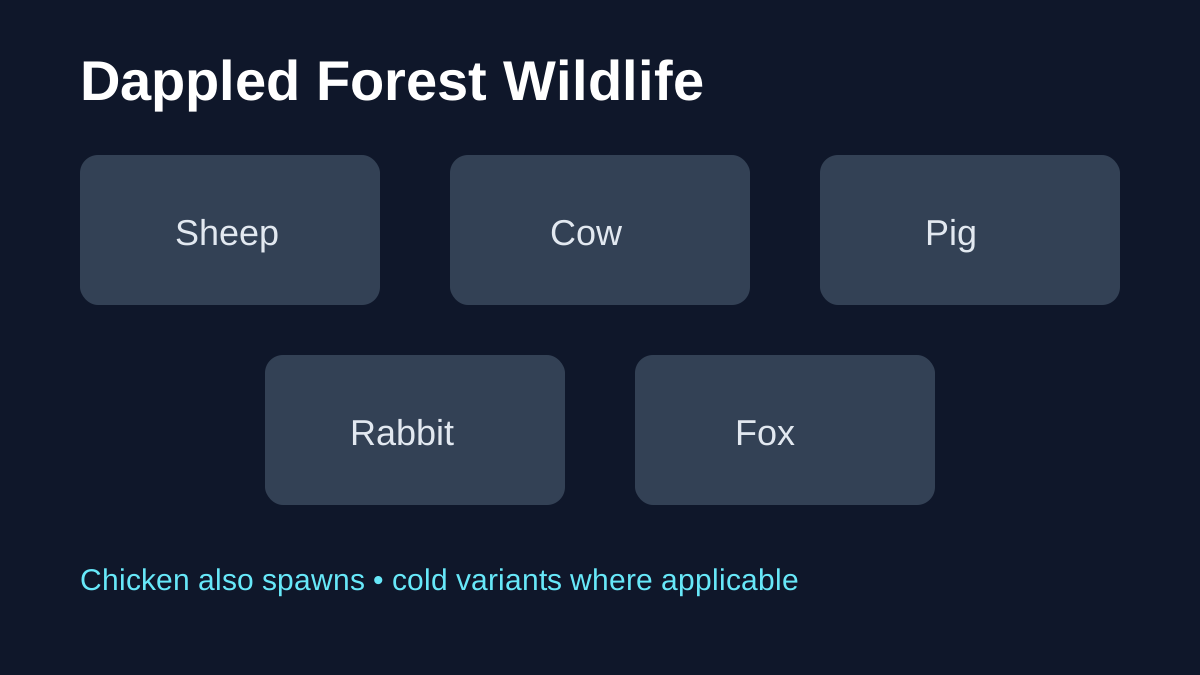
The documented natural wildlife list is sheep, chickens, cows, pigs, rabbits and foxes, with cold variants used where applicable. That gives the biome a useful early-survival mix of food, wool and familiar passive or neutral mobs.
If you are still looking for the biome itself, follow how to find a Dappled Forest. For the biome's non-mob resources, see the Poplar Tree guide and Shelf Mushroom guide.
Confirmed Dappled Forest mob list
| Mob | Officially listed for the biome? | Practical value |
|---|---|---|
| Sheep | Yes | Wool, mutton and breeding |
| Chicken | Yes | Eggs, feathers, chicken and breeding |
| Cow | Yes | Leather, beef, milk and breeding |
| Pig | Yes | Pork and breeding |
| Rabbit | Yes | Rabbit drops and biome atmosphere |
| Fox | Yes | Neutral wildlife and cold-region atmosphere |
Mojang adds the phrase “using their cold variants where applicable.” That qualifier matters because some Minecraft animals have appearance variants associated with climate. It does not mean every listed animal has a separate special Dappled Forest form.
Sheep in the Dappled Forest
Sheep are one of the most useful early-survival spawns because they provide both food and wool. Wool has extra relevance in Wilderness Bound: the update adds Wool Stairs and Wool Slabs for all wool colors, and Wool Slabs are used to craft Cushions.
If you plan to build with the new wool shapes, finding sheep near your first Dappled Forest can reduce the amount of material you need to transport from another base. As always, shearing renewable wool is more efficient than killing a large local population.
Chickens, cows and pigs
Chickens, cows and pigs keep the biome practical for ordinary survival. Chickens provide eggs and feathers, cows supply leather and milk in addition to beef, and pigs provide pork. Their presence means a player who finds a Dappled Forest far from home is not entering a biome that forces immediate travel elsewhere for basic animal resources.
For long-term play, you can establish a temporary camp, gather Poplar Saplings and food, and decide whether the biome is worth turning into a permanent settlement.
Rabbits and foxes
Rabbits and foxes give the biome more of a cold-border woodland character. They are especially useful as visual clues when combined with the autumn Poplar canopy, although a single rabbit or fox does not prove you are inside a Dappled Forest because both mobs can exist in other suitable biomes.
Foxes are neutral rather than ordinary livestock. Players often value them more for atmosphere, behavior and themed builds than for direct resources. Rabbits similarly contribute to the identity of the biome even if your main goal is simply collecting Poplar wood.
What does “cold variants where applicable” mean?
The official wording tells us that the biome uses cold-associated variants for mobs that support that system. The reliable interpretation is not to invent a separate variant for every animal, but to check the normal Minecraft variant rules for the specific mob and game version you are playing.
Variant-selection logic can still receive technical fixes independently of the headline Wilderness Bound features. A screenshot from an early snapshot should therefore not be treated as a permanent guarantee about every texture or phenotype seen in the current stable build.
Do hostile mobs spawn in the Dappled Forest?
The Snapshot 1 feature list specifically calls out the passive and neutral wildlife above. Ordinary Minecraft hostile spawning rules can still matter when darkness, caves, nighttime and other conditions permit hostile mobs. The Dappled Forest should not be treated as safe at night.
A dense canopy can create shaded terrain, and any expedition should still use lighting, shelter and normal survival precautions. If you are exploring an Abandoned Camp after sunset, do not assume the campsite itself protects you from surrounding hostile spawns.
Does an Abandoned Camp add unique mobs?
Mojang's initial Abandoned Camp description focuses on structures, biome variants, chests and barrels with loot. The structure is not introduced as a new village with a dedicated resident mob. If you encounter animals around a Dappled Forest camp, separate ordinary biome spawning from any later structure-specific behavior documented in future notes.
Seeing a mob beside one camp does not prove that the structure itself spawned it. Treat nearby animals as biome spawns unless Mojang documents a structure-specific rule.
Can you build animal farms in the biome?
Yes. The Dappled Forest can support standard player-built animal farms using the same breeding and containment rules as elsewhere, assuming the relevant game mechanics are unchanged. The natural presence of sheep, chickens, cows and pigs means you may be able to source breeding pairs locally instead of transporting them over long distances.
The biome also has enough unique building materials to make a visually coherent farm: Poplar wood for fences and structures, Wool Stairs/Slabs for soft detailing, and Red Shrubs or Shelf Mushrooms for landscaping.
Which Dappled Forest mob is most useful?
For most survival players, sheep are probably the highest-value early find because wool connects directly to several new Wilderness Bound building features. Cows are similarly valuable for leather and food. However, the “best” animal depends on your goal:
- building with Cushions or Wool shapes: prioritize sheep;
- bookshelves and enchanting preparation: cows help with leather;
- arrows and food: chickens provide feathers and meat;
- simple food farming: pigs are straightforward;
- themed wildlife builds: rabbits and foxes fit the biome naturally.
Do the mobs prove you found a Dappled Forest?
No. All six listed mobs can be associated with other Minecraft environments. The best confirmation is the combination of biome features: autumn-colored Poplar trees, Poplar Logs, Shelf Mushrooms, Red Shrubs and the corresponding terrain palette.
If you are unsure whether you have found the correct biome, follow the visual checklist in How to Find a Dappled Forest.
Java and Bedrock considerations
Wilderness Bound shipped in Java 26.3 and Bedrock 26.50. Both final changelogs list the same six Dappled Forest passive/neutral mobs and the same "cold variants where applicable" qualifier. Edition-specific spawn bugs can still exist, so include the exact version when troubleshooting.
When comparing reports from another player, confirm their edition and build. A statement such as “I never saw foxes here” from one preview build is weaker evidence than Mojang's documented spawn list.
What to do with the local wildlife
If you want the biome to remain lively, avoid clearing every passive animal on your first trip. Collect renewable resources, establish breeding pairs if necessary, and leave some wildlife around scenic areas. Foxes, rabbits and farm animals moving through the red-orange-yellow canopy are part of the biome's atmosphere.
For the broader biome—including plants, Poplar resources and camps—return to the Dappled Forest complete guide.